

Forex Leverage Ratio (1:100) Explained: Comprehensive Guide to Benefits and Risks
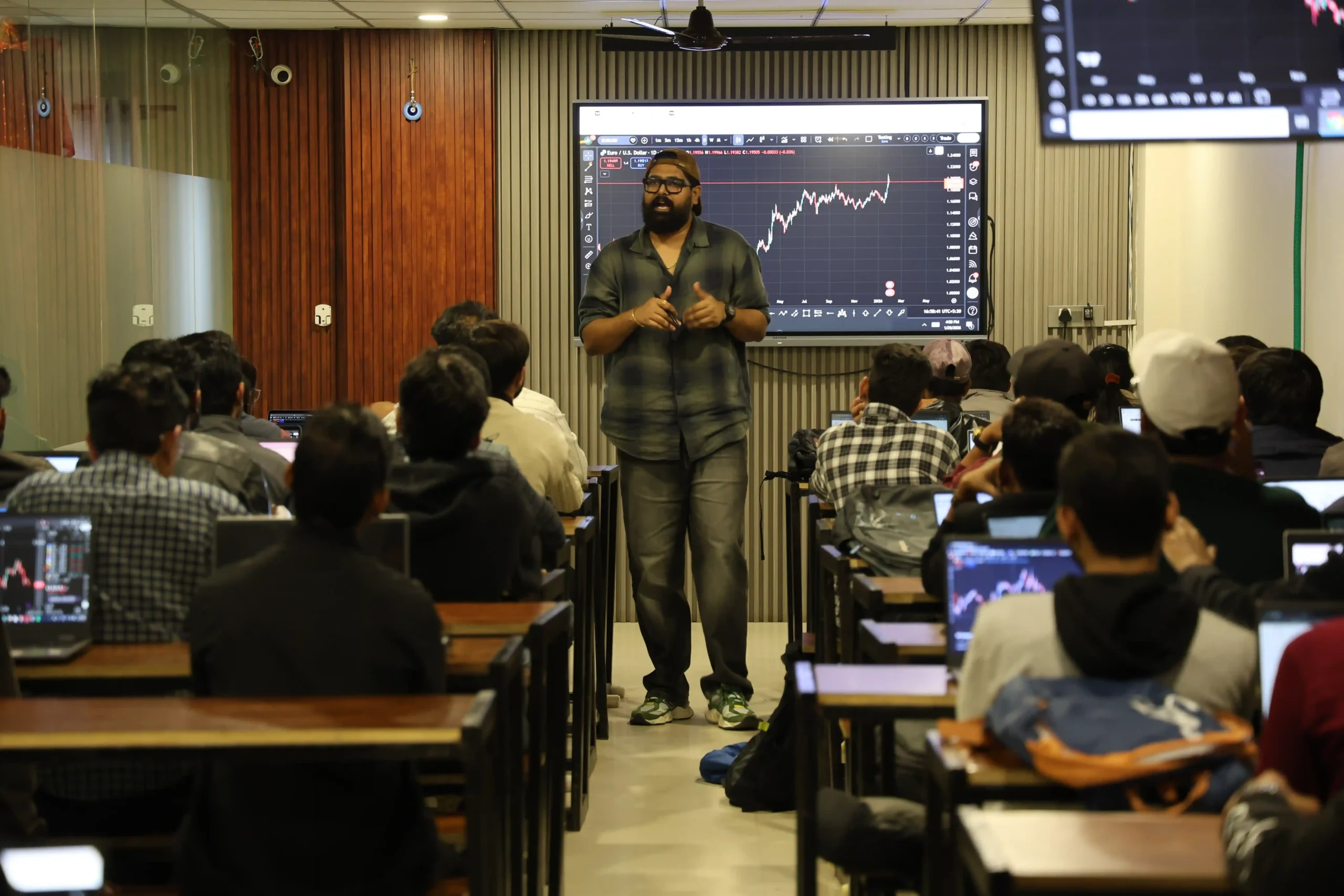
Forex Leverage Ratio (1:100) represents a sophisticated financial mechanism where a trader can control a position worth $100,000 with just $1,000 of collateral. At Bimal Institute, we recognize that mastering this specific ratio is a prerequisite for any individual aiming to transition from retail speculation to professional-grade trading. Our mission is to provide practical, live-market education that transcends basic theory.
This guide is informed by the extensive corporate experience of our founder, Manish Bimal, an MBA in Finance and former Forex Head at leading Indian broking firms. Under his leadership since 2016, Bimal Institute has evolved into Central India’s top trading education hub, boasting over 2,000 positive reviews and a curriculum recently featured in Business Standard for our signature “Crypto & Forex Trading Program”.
View this profile on Instagram
Understanding the Fundamentals of a Forex Leverage Ratio (1:100)
A Forex Leverage Ratio (1:100) is not merely a tool for increasing trade size; it is a mathematical framework that dictates the efficiency of your deployed capital. In technical terms, a 1:100 ratio means the broker requires a 1% margin of the total position value to open and maintain a trade. For an advanced trader, this ratio serves as a bridge between limited personal capital and the high liquidity requirements of the global currency markets.
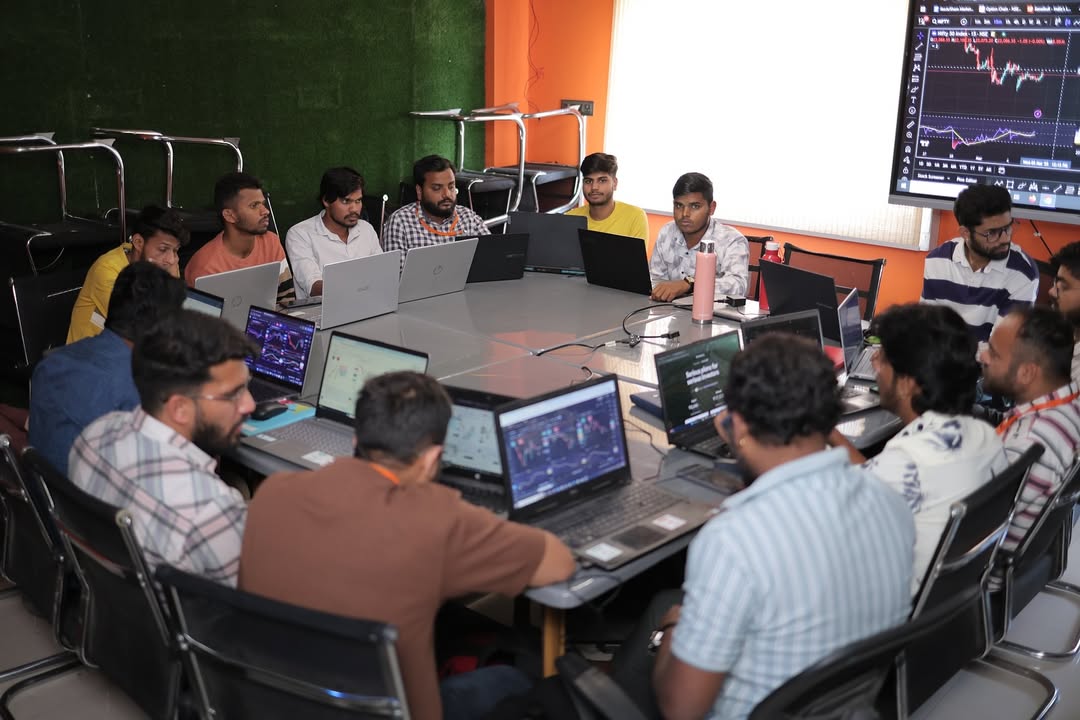
Understanding the Forex Leverage Ratio (1:100) requires a shift in perspective from “how much can I buy” to “how much market exposure can I safely manage.” While a 1:100 ratio significantly boosts purchasing power, it also compresses the room for error. At Bimal Institute, we teach our students that leverage is a utility, not a windfall, and its application must be governed by strict mathematical precision.
How a Forex Leverage Ratio (1:100) Multiplies Market Exposure
When utilizing a Forex Leverage Ratio (1:100), your market exposure is exactly 100 times your initial margin. If you deposit $1,000 and utilize the full extent of this ratio, you are effectively controlling $100,000 worth of currency, which is standard for one “lot” in the forex market. This multiplication means that a small 1% move in the market in your favor can result in a 100% return on your invested margin.
View this profile on Instagram
The Mechanics of Margin Requirements in a Forex Leverage Ratio (1:100) Environment
The margin requirement for a Leverage Ratio (1:100) is calculated by dividing the total contract size by 100. In a live trading environment, this means for every $10,000 of currency you wish to trade, you must have at least $100 in “usable margin” within your account. Our instructors at Bimal Institute emphasize that maintaining a buffer above this minimum is critical to avoid premature liquidation during periods of intraday volatility.
The Strategic Benefits of Utilizing a Forex Leverage Ratio (1:100)
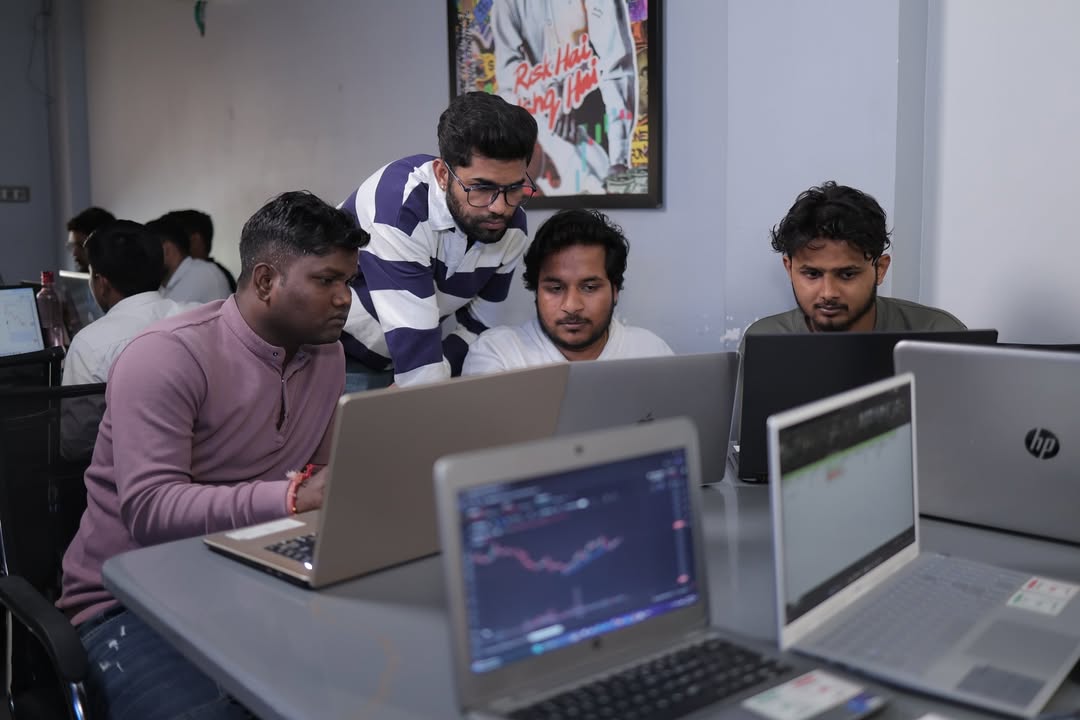
At Bimal Institute, our “practical, live-market education” philosophy highlights that a Forex Leverage Ratio (1:100) is often the “sweet spot” for professional intraday traders. It provides enough power to generate meaningful profits from small currency fluctuations without the extreme, unmanageable risks associated with ratios like 1:500 or 1:1000.
Capital Efficiency and the Forex Leverage Ratio (1:100)
Capital efficiency is the primary driver for using a Forex Leverage Ratio (1:100). By requiring only 1% of the trade value as collateral, traders can keep the remainder of their capital in liquid assets or other investments. This efficiency allows a trader to execute high-volume strategies without needing to lock up massive amounts of cash in a single brokerage account.
Maximizing Potential Returns with a Forex Leverage Ratio (1:100) in Low Volatility Markets
In markets where price movements are marginal, such as the major pairs during the Asian session, a Forex Leverage Ratio (1:100) becomes essential. When a currency pair moves only 20 or 30 pips in a day, unleveraged trading yields negligible returns. However, with a 1:100 ratio, these minor fluctuations can be transformed into significant percentage gains for the trading account.
Diversification Opportunities Provided by a Forex Leverage Ratio (1:100)
Using a Forex Leverage Ratio (1:100) allows for greater portfolio diversification. Instead of committing your entire balance to a single USD/JPY position, the 1% margin requirement frees up capital to take simultaneous positions in EUR/USD, Gold, or Indices. This spread of risk is a core component of the advanced strategies we teach in our “Crypto & Forex Trading Program” at Bimal Institute.
Identifying the Significant Risks of a Forex Leverage Ratio (1:100)
Drawing from Manish Bimal’s extensive corporate experience, we define the Forex Leverage Ratio (1:100) as a “double-edged sword.” While the upside is attractive, the downside can be devastating if not managed with professional discipline. Exposure at this level requires a deep understanding of market mechanics and an absence of emotional bias.
Magnified Losses: The Dark Side of a Forex Leverage Ratio (1:100)
The most immediate risk of a Forex Leverage Ratio (1:100) is the magnification of losses. Just as a 1% favorable move doubles your margin, a 1% move against your position can wipe out your entire allocated margin. For a trader using 100x leverage, there is very little “breathing room” before the account value reaches a critical low.
Dealing with Margin Calls Under a Forex Leverage Ratio (1:100) Structure
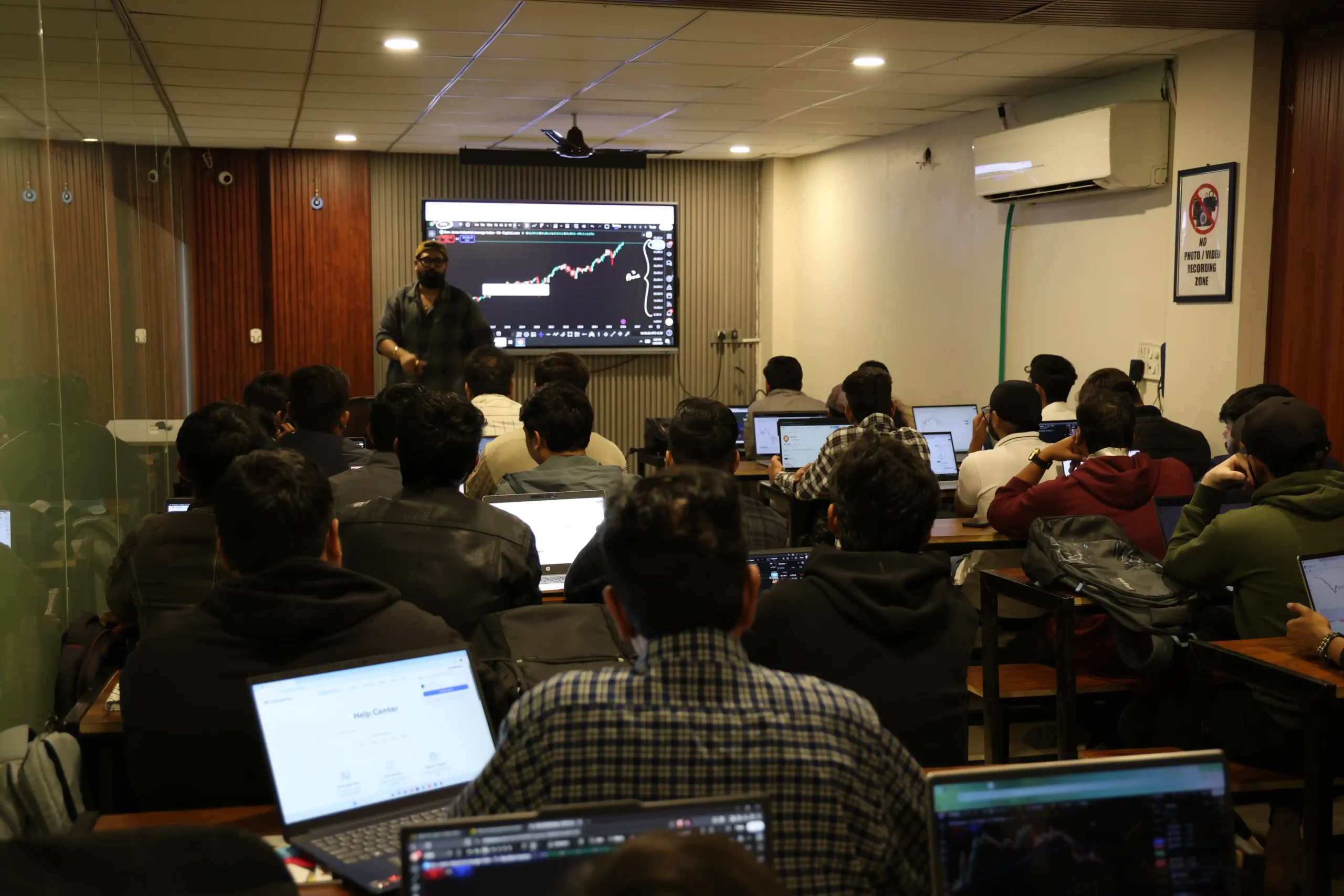
A margin call occurs when your account equity falls below the broker’s required minimum to maintain a Forex Leverage Ratio (1:100) position. Because 1:100 leverage uses a significant portion of available equity for large positions, a sudden spike in volatility can trigger an automatic liquidation of your trades. This often results in realized losses that are difficult to recover from.
Psychological Pressures of High-Stakes Trading with a Forex Leverage Ratio (1:100)
Trading with a Forex Leverage Ratio (1:100) introduces intense psychological pressure. When every pip movement represents a significant percentage of your account balance, fear and greed are amplified. At Bimal Institute, we focus heavily on the “Traders Mindset,” teaching students how to remain clinical and detached even when managing high-leverage positions.
Advanced Risk Management Protocols for a Forex Leverage Ratio (1:100)
As the top trading education institute in Central India, Bimal Institute provides signature risk management frameworks designed specifically for high-leverage environments. Managing a Forex Leverage Ratio (1:100) effectively requires more than just setting a stop-loss; it requires a comprehensive mathematical approach to every trade entry and exit.
Best Forex Trading Institute in Ujjain: Professional Forex Course 2026
Position Sizing Strategies Specifically for a Leverage Ratio (1:100)
Proper position sizing is the only way to survive using a Leverage Ratio (1:100). We advise our students never to risk more than 1-2% of their total account equity on a single trade, regardless of the leverage available. The 1:100 ratio should be used to facilitate the trade size dictated by your risk parameters, not to increase your risk beyond your psychological and financial limits.
Stop-Loss Optimization When Navigating a Leverage Ratio (1:100)
When trading with a Forex Leverage Ratio (1:100), stop-loss placement must be precise. Because the cost of being wrong is magnified 100 times, “wide” stops are rarely sustainable. Our curriculum focuses on using technical structures—such as support/resistance and order blocks—to find the tightest possible stop-loss levels that still allow the trade “room to breathe.”
Calculating Value at Risk (VaR) Within a Forex Leverage Ratio (1:100) Framework
Value at Risk (VaR) is a professional metric we introduce to help traders quantify the potential loss in a Leverage Ratio (1:100) setup over a specific timeframe. By calculating VaR, traders can understand the statistical probability of a significant drawdown, allowing them to adjust their leverage usage during periods of high economic uncertainty or central bank announcements.
| Leverage Level | Deposit Amount | Total Exposure | Required Margin | Pip Value (Standard Lot) |
|---|---|---|---|---|
| 1:10 | $1,000 | $10,000 | $1,000 | $1.00 |
| 1:50 | $1,000 | $50,000 | $200 | $5.00 |
| 1:100 | $1,000 | $100,000 | $10 | $10.00 |
| 1:500 | $1,000 | $500,000 | $2 | $50.00 |
Technical Analysis Integration for Leverage Ratio (1:100) Trading
At Bimal Institute, technical analysis is a core pillar of our curriculum. When using a Leverage Ratio (1:100), there is no room for “approximate” entries. Precision is mandatory because even a minor retracement against a high-leverage position can trigger a stop-out before the eventual move in the predicted direction occurs.
Using Fibonacci Retracements to Time Entries for a Leverage Ratio (1:100)
Fibonacci retracements are vital for traders using a Leverage Ratio (1:100). By identifying the 61.8% or 78.6% levels, traders can enter positions at the point of maximum exhaustion for a counter-trend move. This precision minimizes the “drawdown” period, which is essential when your margin is being utilized at a 100:1 scale.
Volatility Indicators for Managing a Forex Leverage Ratio (1:100) Position
Indicators like the Average True Range (ATR) are indispensable when managing a Leverage Ratio (1:100). If the ATR indicates high volatility, a trader might choose to reduce their leverage or widen their stops. Conversely, in low-volatility environments, the 1:100 ratio can be used more aggressively to capture returns from small price movements.
Price Action Confirmation Before Committing to a Forex Leverage Ratio (1:100) Trade
We teach our students at Bimal Institute that price action is the ultimate truth. Before committing to a Leverage Ratio (1:100) trade, one must look for confirmation signals like engulfing patterns, pin bars, or break-and-retest structures. Entering blindly into a 100x leveraged position without price action confirmation is a recipe for rapid account depletion.
Institutional vs. Retail Perspectives on a Forex Leverage Ratio (1:100)
Manish Bimal’s experience as a former Forex Head provides our students with a unique perspective on how the “big players” view leverage. While retail traders often see a Forex Leverage Ratio (1:100) as a way to get rich quickly, institutional desks view it as a maximum ceiling that is rarely touched in professional portfolio management.

Why Institutional Desks Rarely Exceed a Leverage Ratio (1:100)
Institutional traders typically operate with much lower leverage than 1:100, often staying within the 1:10 to 1:30 range. They prioritize capital preservation over explosive growth. When an institution does use a Forex Leverage Ratio (1:100), it is usually for very short-term arbitrage or highly specific hedging operations rather than directional gambling.
Regulatory Restrictions on the Leverage Ratio (1:100) Across Global Jurisdictions
It is important to note that many top-tier regulators, such as the FCA in the UK or ASIC in Australia, have capped retail leverage at 1:30 for major pairs. The availability of a Forex Leverage Ratio (1:100) is often restricted to professional-categorized accounts or offshore jurisdictions. Understanding these regulations is part of the professional literacy we instill in our students at Bimal Institute.
Professional Trading Psychology and the Leverage Ratio (1:100)
The “Crypto & Forex Trading Program” emphasizes that trading is 20% strategy and 80% psychology. This balance becomes even more skewed when employing a Forex Leverage Ratio (1:100). The ability to remain calm while the market fluctuates in a way that significantly impacts your equity is what separates the professionals from the amateurs.
Best Forex Trading Institute in Indore: Learn Professional Currency Trading 2026
Overcoming Overconfidence Bias in a Forex Leverage Ratio (1:100) Setup
A string of wins using a Forex Leverage Ratio (1:100) can lead to overconfidence bias, where a trader begins to feel invincible. This often leads to “revenge trading” or “over-leveraging” after a subsequent loss. At Bimal Institute, we use live-market simulations in Indore to help traders identify and neutralize these dangerous psychological patterns.
Discipline and Emotional Control Under a Leverage Ratio (1:100) Stress Test
The stress of a Leverage Ratio (1:100) position is a true test of discipline. Discipline means sticking to your pre-defined trading plan even when the 100x leverage makes your heart race. Our mentor-led courses provide the accountability needed to develop this level of emotional control, ensuring that leverage remains a tool and not a source of panic.
| Risk Per Trade | Probability of 10 Consecutive Losses | Account Drawdown (1:100 Leverage) | Potential for Recovery |
|---|---|---|---|
| 1% | 0.001% | 10% | High |
| 2% | 0.001% | 20% | Moderate |
| 5% | 0.001% | 50% | Low |
| 10% | 0.001% | 100% (Ruined) | Zero |
Comparative Analysis: Leverage Ratio (1:100) vs. Other Ratios
Choosing the right leverage is a subjective decision based on risk tolerance and strategy. However, the Forex Leverage Ratio (1:100) serves as a benchmark for many. Comparing it to lower and higher ratios helps traders understand where it fits within their specific trading business model.
Choosing Between a 1:50 and a Leverage Ratio (1:100)
A 1:50 ratio is often safer for those still perfecting their technical analysis. It requires a 2% margin, which provides double the “buffer” of a Forex Leverage Ratio (1:100). For many swing traders who hold positions overnight, 1:50 is preferable to avoid being stopped out by wider spreads or overnight volatility.
Why Beginners Should Avoid a Forex Leverage Ratio (1:100) Initially
We strictly advise beginners at Bimal Institute to avoid a Leverage Ratio (1:100) until they have proven consistency on a demo or micro-account. Without a deep understanding of market flow, a 1:100 ratio will simply accelerate the learning curve of “how to lose money.” Mastery of the basics must precede the application of high leverage.
Practical Case Studies: Trading with a Forex Leverage Ratio (1:100) at Bimal Institute
Real-world application is the cornerstone of our training in Indore. These case studies reflect the experiences of our students as they navigate the complexities of the Leverage Ratio (1:100) in live market conditions.
Case Study A: Successful Scalping Using a Forex Leverage Ratio (1:100)
In this scenario, a student utilized a Forex Leverage Ratio (1:100) to scalp the EUR/USD during the London session open. By identifying a high-probability supply zone and using a tight 5-pip stop-loss, the student was able to achieve a 1:3 risk-to-reward ratio. The 1:100 leverage allowed for a significant profit on a move that lasted only twelve minutes.
Case Study B: The Consequences of Over-Leveraging with a Leverage Ratio (1:100)
Conversely, a case study from our archives involves a trader who ignored position sizing rules while using a Forex Leverage Ratio (1:100). By entering multiple positions on correlated pairs (like GBP/USD and EUR/USD), the trader effectively increased their leverage to 1:300. A single negative economic news event led to a margin call within seconds, demonstrating the “dark side” of unmanaged leverage.
FAQ: Navigating the Forex Leverage Ratio (1:100)
Is a Forex Leverage Ratio (1:100) Suitable for Professional Day Traders?
Yes, a Forex Leverage Ratio (1:100) is widely considered suitable for professional day traders who have a proven risk management system. It provides the necessary capital efficiency to profit from the small intraday price movements typical of major currency pairs.
How Do I Calculate My Margin for a Leverage Ratio (1:100)?
To calculate the margin for a Forex Leverage Ratio (1:100), divide the total value of your position by 100. For example, if you are trading 1 lot ($100,000), your required margin is $1,000.
Can I Lose More Than My Deposit Using a Leverage Ratio (1:100)?
In extreme market conditions, it is possible for an account to go into negative balance when using a Forex Leverage Ratio (1:100). However, most modern brokers offer “Negative Balance Protection,” which automatically closes positions to ensure you do not owe the broker money.
What Is the Difference Between Margin and a Forex Leverage Ratio (1:100)?
The Forex Leverage Ratio (1:100) is the ratio of your capital to the borrowed capital. Margin is the actual amount of “good faith” money you must deposit with the broker to maintain that leveraged position.
Conclusion: Final Expert Verdict on the Leverage Ratio (1:100)
The Forex Leverage Ratio (1:100) remains one of the most powerful tools in a trader’s arsenal, provided it is wielded with the expertise of a professional. Since 2016, Bimal Institute has been at the forefront of forex education in Central India, guiding thousands of students through the intricacies of market mechanics. Our founder, Manish Bimal, always emphasizes that leverage is not a shortcut to wealth but a sophisticated instrument for capital management.
To truly master the Forex Leverage Ratio (1:100), one must move beyond theory and engage with the live market under expert mentorship. We invite you to join our “Crypto & Forex Trading Program”, available both online and offline at our Indore centers. By focusing on the pillars of technical analysis, risk management, and psychology, Bimal Institute ensures that you can utilize high leverage to your advantage rather than falling victim to its risks. Visit our website or contact us today to begin your journey toward professional trading mastery.