

Perpetual Futures Contract in Crypto: Shocking Risks Explained 2026
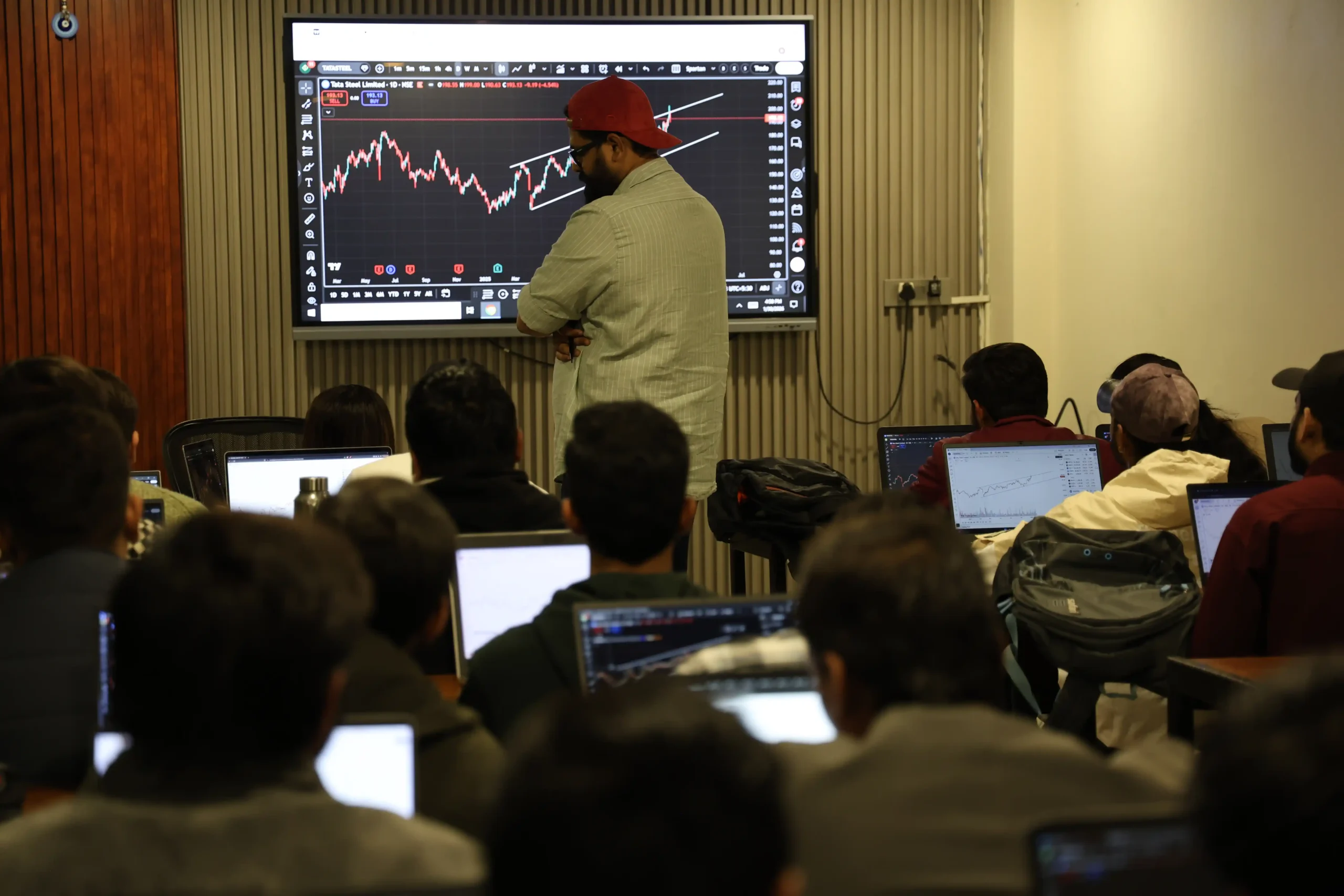
A perpetual futures contract in crypto is a derivative instrument that allows traders to speculate on the price of a cryptocurrency — either upward or downward — without ever owning the underlying asset and without any expiration date.
Unlike traditional futures contracts that settle on a specific date and force traders to “roll over” their positions into the next contract, a perpetual futures contract in crypto can be held indefinitely. As long as a trader maintains sufficient margin in their account, the position stays open.
The concept of the perpetual futures contract in crypto was first practically implemented by BitMEX in 2016 with the launch of the XBTUSD Bitcoin perpetual swap. It has since become the dominant instrument in all of crypto derivatives trading. As of 2026, perpetual futures in crypto account for over 90% of all global crypto derivatives volume — with daily trading volumes frequently exceeding $100 billion across centralised and decentralised exchanges.
Understanding how a perpetual futures contract in crypto works is no longer optional for any serious crypto market participant. Whether you are a trader, investor, or simply trying to understand how crypto markets function, this guide covers everything you need to know.
How Does a Perpetual Futures Contract in Crypto Work?
The mechanics of a perpetual futures contract in crypto are built around two core components: the position itself and the funding rate mechanism that keeps the contract price aligned with the spot market.

When a trader opens a perpetual futures contract in crypto, they choose a direction — long (betting the price will rise) or short (betting the price will fall) — and specify the size of their position and the leverage they want to use. The exchange requires a margin deposit as collateral, which is typically a fraction of the total position value.
Profit and loss are calculated continuously based on the difference between the entry price and the current market price. If a long trader enters a Bitcoin perpetual at $60,000 and the price rises to $62,000, their unrealised profit is $2,000 per BTC (scaled by position size and leverage). If the price falls, losses accrue at the same rate.
View this profile on Instagram
Because there is no expiration, there is no automatic settlement. The trader holds the position until they choose to close it — or until their margin is exhausted and they are liquidated by the exchange.
The Funding Rate — The Engine Behind Perpetual Futures Crypto
The most distinctive and important feature of the perpetual futures contract in crypto is the funding rate. This is the mechanism that keeps the perpetual contract price anchored to the underlying spot market price — without requiring an expiration date.
Every 8 hours (on most exchanges), a funding payment is exchanged between all long and all short position holders. If the perpetual futures price is trading above the spot price — meaning there is more bullish demand for the contract than bearish — the funding rate is positive. Long traders pay short traders.
If the perpetual price is trading below the spot price — meaning shorts are dominant — the funding rate is negative. Short traders pay long traders.
This self-correcting mechanism incentivises traders to take the opposite side of the dominant direction — bringing the perpetual price back toward spot. When the funding rate is very high, it signals extreme bullish sentiment in crypto perps — and historically, extreme positive funding rates have preceded sharp corrections as the cost of holding longs becomes unsustainable.
View this profile on Instagram
Key insight: The funding rate in perpetual futures crypto is not a fee charged by the exchange. It is a payment transferred directly between traders — longs to shorts, or shorts to longs — depending on market sentiment.
Perpetual Futures vs Regular Futures in Crypto — Key Differences
Many traders new to crypto futures trading confuse perpetual futures with regular (fixed-maturity) futures contracts. While they share similarities, the differences are significant and practically important.
| Feature | Perpetual Futures Contract in Crypto | Regular Futures Contract |
|---|---|---|
| Expiration Date | None — holds indefinitely | Fixed — weekly, monthly, quarterly |
| Settlement | No forced settlement | Settles at expiry |
| Price Alignment | Funding rate mechanism | Convergence to spot at expiry |
| Rollover Required | No | Yes — position must be rolled |
| Holding Cost | Funding payments (every 8 hrs) | Contango/backwardation premium |
| Availability | 24/7, all crypto exchanges | More limited — mostly quarterly |
| Popularity | 90%+ of crypto derivatives volume | ~10% of crypto derivatives volume |
The no-expiration feature is why perpetual futures in crypto have become so dominant. Traders do not need to manage contract roll-overs, there is no convergence pressure at expiry, and positions can be held for any time horizon — from seconds to months — without changing contract.

Long and Short Positions in Perpetual Futures Crypto — How They Work
One of the most powerful features of the perpetual futures contract in crypto is the ability to profit in both rising and falling markets — through long and short positions.
A long position in crypto perps profits when the price of the underlying asset rises. If you open a long Bitcoin perpetual at $60,000 with 10x leverage and the price rises to $63,000, your profit is 3,000 × 10 = $30,000 per BTC of notional exposure. A long position is the equivalent of betting that the market will go up.
A short position in crypto perps profits when the price falls. If you open a short at $60,000 with 10x leverage and the price drops to $57,000, you profit on the $3,000 drop amplified by your leverage. Shorting is one of the most powerful uses of the perpetual futures contract in crypto — it allows traders to generate returns during bear markets when spot holders are losing value.
📊 Long vs Short — Perpetual Futures Crypto Example
Asset: Bitcoin perpetual futures
Entry price: $60,000 | Leverage: 10x | Position size: 1 BTC notional
Margin required: $6,000 (10% of $60,000)
—
Long trade: Price rises to $63,000 → Profit = $3,000 (50% return on $6,000 margin)
Short trade: Price falls to $57,000 → Profit = $3,000 (50% return on $6,000 margin)
—
Long trade loss scenario: Price falls to $54,000 → Loss = $6,000 → Liquidation (full margin lost)
Leverage in Perpetual Futures Contract in Crypto — Opportunity and Risk
Leverage crypto trading is one of the most attractive — and most dangerous — features of perpetual futures contracts in crypto. Most major exchanges offer leverage from 2x to 100x, with some offshore platforms offering up to 500x.

Leverage amplifies both gains and losses proportionally. At 10x leverage, a 10% adverse price move wipes out your entire margin deposit. At 50x leverage, a 2% adverse move is enough to trigger liquidation. The higher the leverage, the smaller the price move required to eliminate your position entirely.
Professional traders using perpetual futures in crypto rarely use maximum leverage. Most experienced participants use 2x to 5x — enough to amplify returns meaningfully while maintaining sufficient buffer against normal market volatility. Using 50x or 100x leverage in crypto — one of the most volatile asset classes in existence — is not trading. It is gambling with a near-certain outcome of liquidation.
Liquidation in Perpetual Futures Crypto — What It Is and How to Avoid It
Liquidation is the forced closure of a perpetual futures contract in crypto by the exchange when a trader’s margin balance falls below the maintenance margin threshold. It is the mechanism that prevents trader accounts from going into negative balance.
When a position moves against a trader and their margin balance approaches the liquidation price, the exchange automatically closes the position — typically at a loss equal to the full initial margin. On some exchanges, partial liquidation occurs first to reduce position size before a full liquidation is triggered.
The liquidation price of a perpetual futures contract in crypto depends on three factors: the entry price, the leverage used, and the maintenance margin rate set by the exchange. Higher leverage means the liquidation price is much closer to the entry price — leaving very little room for normal market fluctuation before a forced closure.
- Use low leverage: The most effective way to avoid liquidation in crypto perps is simply to use conservative leverage — 2x to 5x maximum for most traders.
- Set stop losses: Always set a manual stop loss well above the liquidation price to exit the trade with a controlled, defined loss before reaching liquidation.
- Monitor funding rates: Extremely high positive funding rates mean you are paying a significant ongoing cost to hold a long position — and signal a crowded, potentially overextended market.
- Never add to losing positions: Adding more margin to a losing perpetual futures crypto position simply delays liquidation while increasing total loss exposure.
Mark Price vs Last Price in Perpetual Futures Contract in Crypto
A critical concept for traders using perpetual futures contracts in crypto is the difference between the mark price and the last price — because liquidations are calculated based on the mark price, not the last traded price.
The last price is the most recent transaction price on the exchange — the actual price at which the most recent buy or sell was executed. It can be volatile and easily manipulated by large orders in low-liquidity conditions.
The mark price is a fair value calculation derived from the spot price index across multiple exchanges — smoothed to prevent manipulation. Exchanges use the mark price to calculate unrealised P&L and to determine whether a trader’s margin has fallen below the maintenance level.
Using the mark price for liquidations protects traders from being unfairly liquidated by a brief, manipulated last price spike. However, it also means that even if the last price on the exchange has not reached your stop loss, your unrealised P&L and liquidation risk are being calculated against a potentially different mark price.
How Does the Funding Rate Work in Crypto Perpetuals — A Deeper Look
The funding rate in crypto perpetuals is calculated using two components: the interest rate component (typically very small and often fixed) and the premium or discount of the perpetual price relative to the spot index price.
Most major exchanges calculate and settle funding every 8 hours — at 00:00, 08:00, and 16:00 UTC. The funding rate can be positive or negative, and its magnitude reflects the imbalance between long and short demand in the perpetual futures crypto market at any given time.
For traders holding positions through funding periods, the cost (or income) of funding is automatically debited from or credited to their margin balance. A trader holding a large long position through a period of high positive funding rates will see their margin gradually eroded even if the price does not move — a hidden cost that many beginners overlook when calculating the true profitability of a perpetual futures contract in crypto.
Experienced traders actively monitor funding rates as a sentiment indicator. Consistently elevated positive funding suggests extreme bullish sentiment — historically a contrarian signal that a correction may be approaching. Deeply negative funding suggests capitulation or extreme bearish positioning — often a signal that a short squeeze and upward price reversal may be near.
Best Exchanges for Perpetual Futures in Crypto — 2026
The perpetual futures contract in crypto is available on dozens of centralised and decentralised exchanges. Here are the most established and widely used platforms as of 2026:
| Exchange | Type | Max Leverage | Notable Feature |
|---|---|---|---|
| Binance | Centralised (CEX) | 125x | Largest global volume, widest pair selection |
| Bybit | Centralised (CEX) | 100x | Deep liquidity, strong institutional presence |
| OKX | Centralised (CEX) | 100x | Advanced order types, broad market coverage |
| Hyperliquid | Decentralised (DEX) | 50x | Dominant onchain perps, $4T+ cumulative volume |
| dYdX | Decentralised (DEX) | 20x | Non-custodial, no KYC required |
| Coinbase (Advanced) | Centralised (CEX) | 10x | US-regulated, institutional grade |
For most retail traders new to perpetual futures contract in crypto trading, Binance or Bybit offer the best combination of liquidity, user interface, and educational resources. For traders who prioritise non-custodial trading, Hyperliquid has become the dominant decentralised exchange for crypto perps — processing billions of dollars in daily volume with on-chain transparency.
Risks of Trading Perpetual Futures Contract in Crypto
The perpetual futures contract in crypto is one of the highest-risk instruments available to retail traders. Understanding the risks before trading is not optional — it is essential.
Liquidation risk is the most immediate and common risk. The combination of high leverage and crypto’s extreme volatility means that positions can be liquidated within minutes — or even seconds — of being opened if leverage is excessive relative to the trader’s margin buffer.
Funding rate risk is the hidden ongoing cost that many beginners overlook. In periods of extreme market sentiment, funding rates can reach 0.1% to 0.5% per 8-hour period — equivalent to 3% to 15% per day. A position held for several days during a high-funding period can lose a significant portion of its margin to funding payments alone, independent of price movement.
Exchange risk applies to centralised platforms. Traders holding margin on a centralised exchange are exposed to exchange insolvency, hacking, regulatory shutdown, or withdrawal restrictions. The collapse of FTX in 2022 — then the second-largest crypto exchange — demonstrated that even large, seemingly reputable platforms can fail without warning.
Volatility and slippage risk is particularly acute in crypto markets. During flash crashes or rapid liquidation cascades, the mark price can move so fast that a position is liquidated at a significantly worse price than the theoretical liquidation level — leaving the trader with less than expected after closure.
Perpetual Futures Contract in Crypto vs Spot Trading — Which Is Right for You?
The perpetual futures contract in crypto and spot trading serve fundamentally different purposes — and understanding the distinction is essential for choosing the right approach for your goals and risk tolerance.
Spot trading involves buying and owning the actual cryptocurrency. You profit if the price rises and lose if it falls — with losses capped at 100% of your investment. There is no leverage, no liquidation risk, no funding cost, and no time pressure. Spot trading is the simplest, most transparent, and most sustainable approach for long-term holders.
Perpetual futures in crypto allow leveraged exposure to both rising and falling markets without owning the asset. They are best suited for experienced traders who want to amplify returns, hedge existing spot positions, or profit from short-term market movements in either direction.
If you are new to crypto trading, spot trading should be your starting point. Perpetual futures contracts in crypto should only be approached after you have a solid understanding of leverage, liquidation, funding rates, and risk management — and have developed consistent profitability in unleveraged markets first.
FAQs — Perpetual Futures Contract in Crypto
What is a perpetual futures contract in crypto?
A perpetual futures contract in crypto is a derivative that allows traders to speculate on cryptocurrency price movements — long or short — with leverage, and with no expiration date. Unlike traditional futures, positions can be held indefinitely as long as sufficient margin is maintained. The funding rate mechanism keeps the contract price aligned with the underlying spot market.
How does the funding rate work in crypto perpetuals?
The funding rate in crypto perpetuals is a periodic payment — typically every 8 hours — exchanged between long and short position holders. If the perpetual price is above spot, the rate is positive and longs pay shorts. If below spot, the rate is negative and shorts pay longs. This mechanism keeps perpetual futures crypto prices anchored to their underlying asset value.
What is the difference between perpetual futures and regular futures in crypto?
Perpetual futures contracts in crypto have no expiration date and use a funding rate to maintain price alignment with spot. Regular futures contracts expire on a fixed date and converge to spot price at settlement. Perpetual futures require no rollover and currently account for over 90% of all crypto derivatives trading volume due to their simplicity and flexibility.
How is liquidation calculated in crypto perps?
Liquidation in crypto perpetuals is triggered when a trader’s margin balance falls below the maintenance margin threshold — calculated using the mark price, not the last traded price. The liquidation price depends on entry price, leverage used, and the exchange’s maintenance margin rate. Higher leverage brings the liquidation price much closer to the entry price.
Can beginners trade perpetual futures in crypto?
Technically yes — but it is strongly advised that beginners start with spot trading before approaching perpetual futures contracts in crypto. The combination of leverage, liquidation risk, funding rate costs, and crypto’s extreme volatility makes perps one of the highest-risk retail trading instruments available. Beginners who start with perps and high leverage typically blow their accounts very quickly.
What leverage should I use for crypto perpetual futures?
Most experienced traders using perpetual futures contracts in crypto recommend a maximum of 2x to 5x leverage for retail participants. Higher leverage dramatically reduces the price movement required to trigger liquidation and leaves almost no buffer for normal market volatility. The leverage that a platform offers and the leverage a disciplined trader should actually use are very different numbers.
Final Takeaway — Mastering the Perpetual Futures Contract in Crypto
The perpetual futures contract in crypto is the most traded derivative in the entire cryptocurrency market — and for good reason. It offers unmatched flexibility, 24/7 availability, the ability to profit in both rising and falling markets, and leveraged exposure without the complexity of contract rollovers.
But it is also one of the most dangerous instruments available to retail traders. Liquidation, funding costs, extreme volatility, and exchange risk are real and consequential. The majority of retail traders who approach crypto perps with excessive leverage and insufficient understanding of the mechanics lose their capital — often rapidly.
Approach the perpetual futures contract in crypto with respect. Learn the mechanics thoroughly. Start with the lowest leverage available. Use stop losses on every trade. Monitor funding rates as a sentiment tool. And always — always — risk only what you can afford to lose entirely.
Your Action Step: Before opening your first perpetual futures contract in crypto, practice on a testnet or paper trading account for at least 30 days. Understand your liquidation price before every trade. Set a stop loss before entry — not after. Master the instrument before sizing up.