

Who Should Learn Forex Trading in 2026?
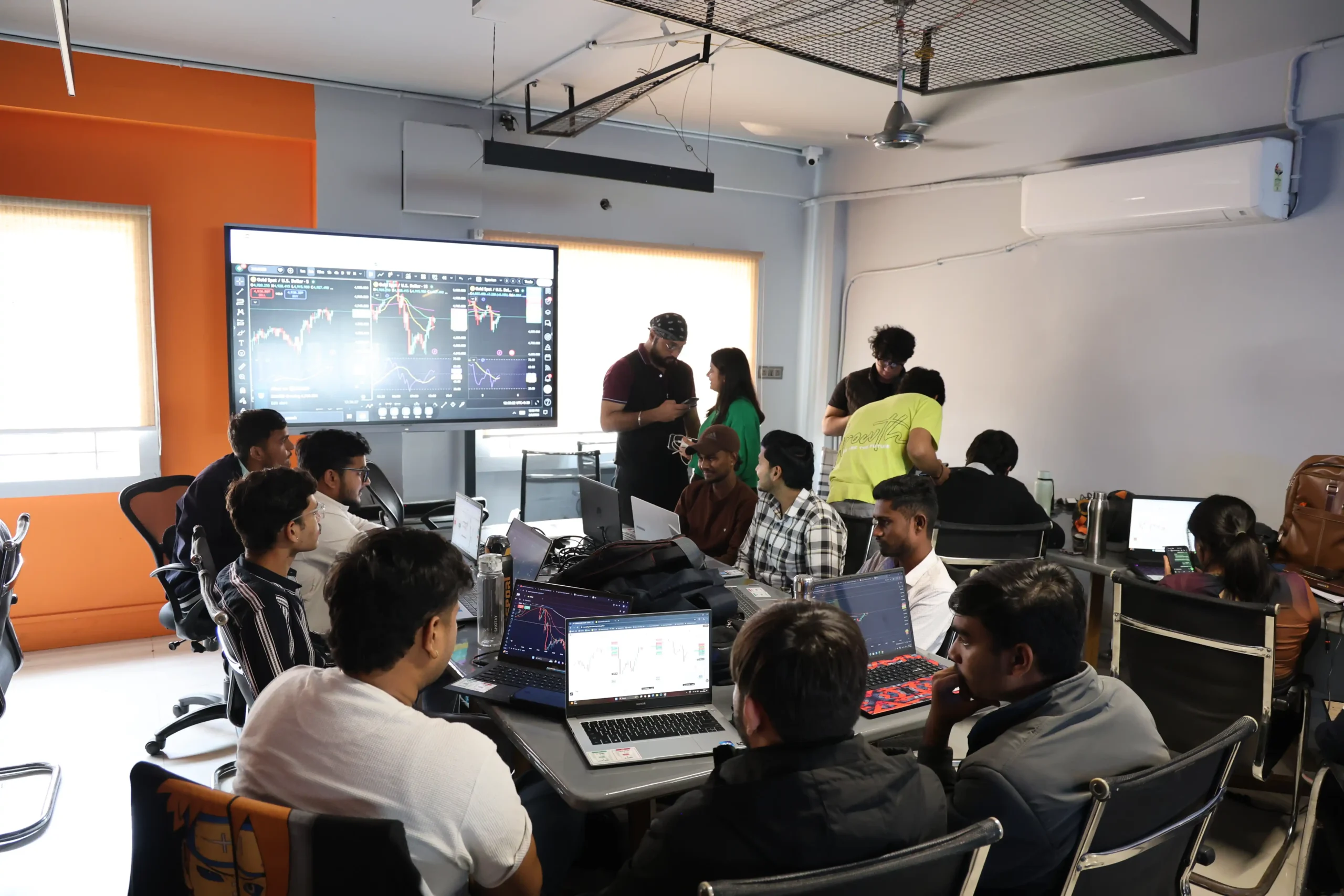
A practical, no-fluff guide for Indians exploring currency markets, covering who genuinely benefits, who should hold off, what structured learning looks like, and how to choose the right institute.
Important Disclaimer: Forex trading involves substantial risk of loss. This article is for educational purposes only and does not constitute financial advice. Trading in currency markets is not suitable for everyone. Always understand the risks involved before committing capital. Bimal Institute provides education, not investment advisory services.
Why This Question Matters More Than Ever in 2026
The currency market trades over $7 trillion daily, making it the largest financial market in the world. Yet in India, most people who search “learn forex trading” have no clear picture of whether forex is right for their situation, their goals, or their lifestyle. The internet offers plenty of videos promising “daily profits” and “quit your job” outcomes. What it rarely offers is an honest, structured answer to the more important question: is this even the right market for you?
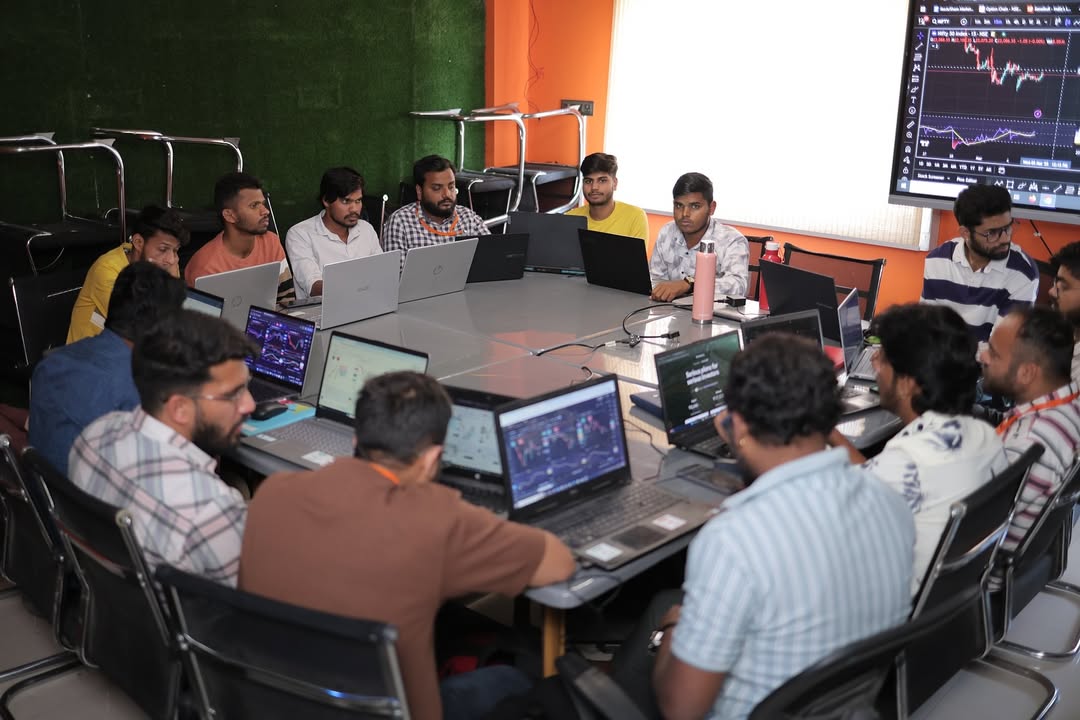
In 2026, the landscape has shifted significantly. India’s financial literacy is growing. SEBI-regulated currency derivatives on NSE and BSE have made certain forex instruments legally accessible to Indian residents. Retail traders have better tools, better platforms, and more educational resources than ever before. At the same time, the market is more competitive, algorithmic trading has increased, and the consequences of learning from the wrong source, or jumping in without proper preparation, are just as real as they have always been.
This guide does not promise overnight results. It does not list strategies that “always work.” What it offers is something more valuable: a clear-eyed look at who genuinely benefits from learning forex trading in 2026, what that learning process looks like in practice, and how to evaluate whether a structured course at an institute like Bimal Institute is worth your time and investment.
Direct Answer
Forex trading is most suitable for individuals who can commit to structured learning, manage risk systematically, and treat trading as a skill-based discipline rather than a quick income source. In India in 2026, the best candidates include analytically minded working professionals, finance students, entrepreneurs managing currency exposure, and disciplined individuals willing to invest months, not days, in building competence.
The State of Forex Trading in India in 2026
Understanding the regulatory and market context is the first step any serious learner should take. In India, forex trading for retail participants is governed by RBI and SEBI guidelines. Indian residents can legally trade currency pairs involving the Indian Rupee (INR), specifically USD/INR, EUR/INR, GBP/INR, and JPY/INR, through SEBI-regulated exchanges like NSE, BSE, and MSE. Trading in non-INR pairs through offshore brokers is subject to FEMA restrictions and carries legal risk.
This regulatory reality is something many beginners discover after they have already opened an account with an offshore broker based on YouTube recommendations. One common issue we frequently observe in classroom settings is students arriving with offshore broker accounts already set up, having received no guidance on the legal framework governing what they can and cannot do as Indian residents.

The good news is that the legal, SEBI-regulated path is genuinely viable for Indian traders. Currency futures and options on NSE provide legitimate access to forex price movements, and the liquidity in USD/INR specifically has grown substantially. For someone learning the discipline of forex trading, starting with regulated instruments is not a compromise. It is the right foundation.
| Aspect | 2022 Situation | 2026 Reality |
|---|---|---|
| Regulatory Clarity | Confusing, many learners unaware of FEMA | Greater awareness, SEBI framework better understood |
| Available Instruments | Primarily INR pairs on NSE | Expanded options, better liquidity in currency derivatives |
| Education Quality | Mostly unstructured YouTube content | Structured institute-based programs gaining credibility |
| Technology Access | Desktop-heavy, charting tools limited | Mobile-first platforms, AI-assisted analysis tools |
| Common Beginner Trap | Offshore brokers, leverage misuse | Overconfidence from AI tools, skipping fundamentals |
Who Should Learn Forex Trading? A Realistic Assessment
This is the core question, and it deserves a specific answer rather than a vague “anyone can trade.” Based on practical experience working with thousands of learners across India, there are distinct profiles where forex education creates genuine, lasting value, and profiles where it is a poor fit or a premature step.
Profiles That Benefit Most
Finance and Economics Students
Strong conceptual foundation, comfort with numbers, long runway to develop skills before capital is involved.
Working Professionals
Stable income reduces financial pressure. Analytical roles in IT, banking, and accounting often transfer well to technical trading.
Entrepreneurs and Exporters
Direct business relevance: understanding currency risk management is commercially valuable regardless of active trading.
Stock Market Investors
Existing market literacy shortens the learning curve. Asset class diversification is a legitimate goal.
Retired Professionals
Time availability is a genuine advantage. Discipline required suits individuals with structured routines and patience.
Homemakers and Career Changers
With proper structured education, individuals developing a long-term skill find forex rewarding when expectations are realistic.
Who Should Wait or Reconsider
Many beginners make the mistake of treating forex as an emergency income source. In real-world situations, individuals under acute financial pressure, those carrying high-interest debt, or those who cannot afford to lose their learning capital consistently make poor decisions under stress. Stress and good trading are fundamentally incompatible.
- People seeking immediate income replacement: Forex requires a development period measured in months, not weeks. Using it to replace lost income introduces emotional bias that makes learning nearly impossible.
- Individuals with no risk tolerance: Every trade involves uncertainty. If the idea of a controlled, planned loss causes significant anxiety, the market will create chronic stress rather than opportunity.
- Those unwilling to study the legal framework: Trading without understanding FEMA, SEBI regulations, and tax obligations creates legal and financial risk that no strategy can compensate for.
- People who have not built financial reserves: Learning forex while depending on the same capital for household expenses is a recipe for poor decision-making under pressure.
“Forex trading is not a shortcut to wealth. It is a skill that rewards disciplined study, systematic practice, and patient capital deployment, none of which can be rushed.”
What Does Learning Forex Actually Involve?
Many people who search “learn forex trading” picture themselves watching a few hours of video content and then starting to trade profitably. The reality is meaningfully different, and understanding it upfront saves months of frustration and capital loss.
The Three Phases of Forex Education
Phase 1: Foundational Knowledge (Weeks 1 to 6)
This phase covers the mechanics of currency markets: how pairs are quoted, what pip movements mean, how margin and leverage work in the Indian context, how economic data like RBI policy decisions and US Fed announcements influence INR pairs, and how to read a price chart with basic competency. Many learners rush through this phase. That almost always creates problems later.
Phase 2: Technical and Analytical Skill Building (Weeks 6 to 16)
This is where most practical work happens: learning to identify trend structure, support and resistance levels, candlestick patterns, and indicator combinations that have logical basis rather than using indicators blindly. Crucially, this phase also covers risk management mechanics: position sizing, stop-loss placement, and calculating risk-reward ratios before entering a trade. Based on practical experience, traders who cannot articulate their risk on every trade before entry have not yet internalized this phase properly.
Phase 3: Practice, Journaling, and Consistency (Ongoing)
Paper trading and demo account practice is where cognitive understanding becomes operational habit. Maintaining a trade journal is not optional at this stage. It is the primary mechanism through which patterns in decision-making, good and bad, become visible. Most successful traders we encounter have journals going back to their first demo trade.
Key Takeaways: What Forex Learning Actually Requires
- Minimum 3 to 6 months of structured study before meaningful live trading
- Understanding of Indian regulatory framework (SEBI, RBI, FEMA) is non-negotiable
- Risk management is learned behavior, not intuition, and must be practiced systematically
- Demo trading should closely mimic the conditions of live trading, including emotional discipline
- A trade journal is the most underused tool among beginners and the most used among experienced traders
- Tax obligations on forex gains in India must be understood before the first live trade
Why 2026 Is a Pivotal Year for Forex Learners in India
There are genuine structural reasons why learning forex trading in 2026 is both more accessible and more complex than it was five years ago.
Access and Technology Have Improved
Mobile trading platforms have matured. Real-time data is more affordable. AI-assisted charting tools can identify patterns in seconds that once took hours of manual analysis. For learners, the barrier to accessing good analytical tools is lower than ever before.
AI Tools Are a Double-Edged Sword
One common issue we frequently observe with 2025 to 2026 learners specifically is an over-reliance on AI-generated signals and trading bots. These tools can generate plausible-sounding analysis without any understanding of market context, and beginners using them often develop a false sense of competence. The fundamental analytical skills that underpin good trading judgment cannot be outsourced to an algorithm, at least not without first developing the judgment to evaluate what the algorithm is telling you.
The Indian Middle Class Is Expanding Its Investment Horizon
Mutual funds and equity investing are now relatively mainstream for educated urban Indians. Forex is the natural next frontier for those who want to develop additional market skills and understand currency dynamics that affect their broader financial life. For Indians with international investments, NRI remittances, or import-export businesses, currency literacy has real practical value regardless of whether they trade actively.
The Cost of Bad Decisions Has Not Changed
Technology improvements and better education options do not change the fundamental reality that undercapitalized, undertrained traders lose money systematically. Structured education from a credible institute is not a guarantee of success, but it is the single most important controllable variable in that outcome.
Educational Case Studies: Common Journeys in Forex Learning
The following case studies are educational scenarios inspired by patterns commonly observed among learners. They are not testimonials, do not describe real clients, and do not make any earnings claims. They are presented to illustrate the kinds of challenges, misconceptions, and learning progressions that are typical in the Indian forex education context.
Case Study 1 of 5
Riya: The Absolute Beginner
22-year-old commerce graduate from Pune. No prior exposure to financial markets.
Situation
Riya had just finished her BCom and was preparing for competitive exams while looking for ways to build a practical financial skill. A friend had mentioned that forex trading could be done from home with a mobile phone. She watched several YouTube videos over two weeks and felt she understood enough to start. Her initial mental model: buy when the price goes up, sell when it goes down.
Problem Analysis
Riya’s core misconception was that forex trading was essentially pattern-spotting with no deeper foundation required. She had no concept of margin, no understanding of economic drivers behind INR movement, and no framework for deciding how much of her savings to risk on any single trade. She had also begun exploring an offshore broker account after seeing it promoted in a Telegram group, with no awareness of the regulatory implications.
Learning Phase
After enrolling in a structured program, Riya’s first three weeks were spent entirely on foundational content she initially found “boring”: how currency pairs are priced, what a pip means in rupee terms at different lot sizes, how RBI policy decisions affect USD/INR, and critically, the legal and regulatory landscape. She later described this grounding as the most practically useful element of the program, because it prevented several potential regulatory mistakes.
Implementation Phase
Riya spent four months on a demo account before committing any real capital. During that period she made all the classic mistakes, over-trading, ignoring stop-losses, doubling down on losing positions, but in a context where the cost was zero. Her journal from this period ran to over 60 pages of trade notes and reflections. When she eventually moved to a live account on NSE currency derivatives, her position sizes were conservative, stop-losses were pre-planned, and she had a written rule set governing when she would and would not enter a trade.
Outcome
Riya’s trading outcomes over her first three live months were modest in profit terms but exceptional in process terms. She avoided the major blow-up that characterizes many first-year traders and developed the foundation for long-term skill building. More importantly, she developed realistic expectations about what forex trading involves and the timeline required to develop genuine competence.
Key Lessons
- Regulatory knowledge is the first thing to learn, not an afterthought
- Demo trading must be taken as seriously as live trading to have developmental value
- The foundational content is what separates sustainable traders from those who burn out
- Telegram groups and unverified social media signals are a significant risk for beginners
- A trade journal transforms random activity into deliberate skill development
Case Study 2 of 5
Arjun: The Working Professional With Limited Time
34-year-old software engineer from Bengaluru. 9-to-7 work schedule. Father of one.
Situation
Arjun had been investing in mutual funds and Nifty index funds for four years. He was analytically sharp and comfortable reading data. After learning more about currency markets, he became interested in forex, primarily as a way to apply his quantitative skills and potentially supplement his investment returns. His challenge was time: he could realistically dedicate three to four hours per week to study and practice.
Problem Analysis
Arjun’s initial approach was to look for short-cut strategies that would let him trade actively despite limited time. He explored several indicator-based systems that promised clear, unambiguous signals with minimal analysis required. He quickly discovered that these systems generated false signals frequently, and without understanding why the signals were generated, he had no framework for knowing when to trust them.
Learning Phase
A structured course helped Arjun recognize that his situation, limited time but strong analytical ability, pointed toward a particular style of trading: higher time frame analysis with fewer, higher-quality setups rather than intraday scalping. He spent significant time understanding how to analyze USD/INR on daily and weekly charts, focusing on macro drivers he could research outside market hours.
Implementation Phase
Arjun developed a weekend analysis routine: one to two hours on Sunday reviewing macro context, identifying key levels, and planning potential trade scenarios for the week. During weekdays, he checked positions before work and after market close. He deliberately chose not to trade during the core intraday session, recognizing that his job required mental bandwidth he could not simultaneously direct at active trading.
Outcome
Arjun’s approach produced a more sustainable trading practice than many full-time beginners achieve. The key insight was that matching trading style to lifestyle constraints is not compromise, it is sound planning. His risk management was tighter than most beginners because every trade had been analyzed over hours rather than minutes, reducing impulsive entries significantly.
Key Lessons
- Trading style must match lifestyle, not the reverse
- Working professionals with analytical backgrounds have genuine advantages if applied correctly
- Higher time frame trading is often better suited to people with limited daily availability
- Pre-planning trades outside market hours reduces emotional decision-making during live sessions
- Existing market literacy from equity investing is a real asset in forex education
Case Study 3 of 5
Mehul: Recovering From Trading Losses
28-year-old from Surat. Had lost approximately Rs. 80,000 trading on an offshore platform over six months.
Situation
Mehul had taught himself forex through YouTube and Telegram groups. He had lost his initial capital, deposited more, and lost that too. By the time he sought structured education, he was frustrated and questioning whether forex was simply “rigged against retail traders.” He came with deeply ingrained bad habits: no stop-losses, random position sizes, and a pattern of holding losing trades hoping they would turn around while cutting winning trades prematurely.
Problem Analysis
Mehul’s losses were not primarily caused by bad market timing. They were caused by a complete absence of risk management. He had also been trading on an offshore broker, which carried regulatory and fund-safety risks he had not fully understood. His emotional need to “get it back” created a destructive feedback loop where losses led to larger, more desperate trades.
Learning Phase
The most difficult part of Mehul’s re-education was conceptual: accepting that the losses were information, not just misfortune. Working through his trade history revealed a consistent pattern of three specific mistakes, all of which had logical explanations and correctable causes. This analytical process, painful as it was, was also the beginning of genuine learning.
Implementation Phase
Mehul was advised to close his offshore account, understand the regulatory implications, and restart on NSE currency derivatives with much smaller capital. He built a strict rule set that required him to write down his trade rationale, entry, stop-loss, and target before placing any order. He also implemented a daily maximum loss rule, beyond which he was not permitted to place further trades that day.
Outcome
Mehul’s recovery was not a straight line. He had emotional patterns to unlearn alongside analytical skills to build. But the shift from chaotic, reactive trading to structured, rule-based trading produced measurable improvements in decision-making quality over a six-month period. He did not recoup previous losses, but he stopped the cycle of further losses and built a foundation for sustainable practice.
Key Lessons
- Attempting to recover trading losses through more trading without changing behavior always fails
- Loss analysis is the most valuable educational resource available to traders who have lost money
- Rule-based trading with pre-written trade plans is a direct solution to emotional, impulsive execution
- Offshore account risks must be addressed before moving forward
- A daily loss limit is one of the highest-value risk management tools a recovering trader can implement
Case Study 4 of 5
Priya: Stock Market Investor Entering Forex
41-year-old financial analyst from Mumbai. 12 years of equity market experience.
Situation
Priya had a strong equity background: she understood financial statements, sector analysis, and long-term portfolio construction. She was interested in forex primarily for diversification and because currency movements had begun to affect her equity positions in ways she wanted to understand better. She came to forex education with significant overconfidence in her transferable skills.
Problem Analysis
Priya’s equity instincts, specifically the habit of buying strong businesses and holding through volatility, did not translate well to the currency market. Currency pairs have no intrinsic value growth over long time horizons in the way equities do. Her initial trades held losing positions for weeks expecting a reversal, applying equity logic to a market that operates on completely different principles.
Learning Phase
Priya’s education focused heavily on where forex and equities diverge. The role of central bank policy in currency valuation, the impact of interest rate differentials, and the much shorter catalyst cycles in forex required a genuinely different mental model than equity analysis. Economic data releases can move USD/INR meaningfully within minutes, a pattern entirely unlike her equity experience.
Implementation Phase
She developed a hybrid approach: using her macro analysis skills to form a directional bias on USD/INR based on RBI and Fed policy, then using technical analysis to time entries and manage positions on shorter time frames. This played to her genuine strengths while building new skills for the forex-specific elements.
Outcome
Priya developed a disciplined, macro-driven approach to currency futures that integrated naturally with her existing financial knowledge. Her primary value was not in active trading profits but in the genuine improvement in understanding how currency dynamics affected her broader portfolio. The forex education also improved the quality of her equity research on export-oriented companies.
Key Lessons
- Equity experience is valuable but requires deliberate unlearning of several assumptions
- Currency markets operate on macro drivers that differ fundamentally from equity fundamentals
- Applying equity “hold through drawdowns” thinking to forex pairs creates large unmanaged losses
- Forex knowledge improves equity analysis for internationally exposed businesses
- Even experienced investors benefit from structured forex-specific education
Case Study 5 of 5
Vikram: Comparing Multiple Institutes Before Choosing
31-year-old from Hyderabad. Evaluated four training programs over three months before enrolling.
Situation
Vikram was methodical by nature and refused to enroll in the first program he encountered. He spent three months researching forex education options, attending free webinars, reading reviews, and asking detailed questions of multiple institutes. His approach revealed dramatic differences in quality, intent, and substance across the options he evaluated.
Problem Analysis
Two of the four institutes Vikram contacted could not clearly explain the regulatory framework for Indian forex traders, which he recognized as a significant red flag. One program promised “live trading sessions where you watch the instructor earn” and emphasized profit outcomes heavily. Another had no clear curriculum outline, responding to his questions with sales calls rather than educational content.
What He Looked For
Vikram asked each institute: Does the curriculum cover SEBI regulations and legal trading instruments for Indian residents? Is risk management taught as a core subject or a footnote? What does the post-course support structure look like? He also asked for a written curriculum rather than a verbal description. He treated any encouragement to trade live capital during initial learning as a significant negative signal.
Outcome
Vikram’s careful selection process meant that when he did enroll, his learning experience aligned with his expectations. He experienced no hidden upsells, the legal framework was taught thoroughly, and risk management was genuinely central to the curriculum. His post-enrollment experience validated his pre-enrollment research approach entirely.
Key Lessons
- Taking time to evaluate multiple institutes before enrolling is essential due diligence
- An institute’s inability to explain the Indian regulatory framework clearly is a disqualifying red flag
- Profit-focused marketing language should raise questions about educational substance
- A written curriculum outline is a reasonable request that credible institutes should provide
- Encouraging live funded trading during initial learning phases is a negative signal
- Post-course support quality reflects an institute’s genuine investment in student outcomes
How to Choose the Right Forex Training Institute in India
This section is a practical framework for people who have decided to pursue structured forex education and are evaluating their options. It is not a promotional section; it is derived from observing what differentiates high-quality and low-quality training programs in practice.
Essential Evaluation Checklist
- Does the curriculum explicitly cover SEBI-regulated instruments and Indian forex trading regulations?
- Is risk management taught as a core subject throughout the course, not just mentioned once?
- Is a written curriculum available before enrollment, not just a verbal pitch?
- Does the institute teach on SEBI-regulated platforms (NSE/BSE currency derivatives) rather than primarily offshore platforms?
- Are instructors active market participants with verifiable credentials?
- Is there a demo trading or paper trading phase built into the curriculum?
- Does the program include tax treatment of forex income in India?
- Is post-course support clearly defined, not vague?
- Are student reviews available from multiple independent sources?
- Does the institute discourage live funded trading until the student has completed demo phases?
Red Flags to Watch For
- “Guaranteed returns” or specific profit claims in any marketing material
- Emphasis on offshore brokers with high leverage as the primary trading platform
- No mention of stop-losses, risk management, or capital protection in course overview
- Instructors who deflect questions about their own trading credentials
- Pressure tactics: “limited seats,” “price going up tomorrow,” or “batch starting in 2 days”
- Live profit screenshots as primary marketing content rather than educational substance
- Encouraging students to invest real capital immediately during course learning
- No written curriculum, only verbal promises about what will be taught
- Unverifiable testimonials or reviews only on the institute’s own platforms
- Primary focus on signals groups or bot subscriptions as post-course support
Important Questions to Ask Any Institute Before Enrolling
- What specific SEBI-regulated instruments does your curriculum focus on for Indian students?
- How much of the curriculum is dedicated to risk management versus strategy?
- What is your guidance on when a student should transition from demo to live trading?
- How do you handle the tax treatment of forex income in your curriculum?
- What post-course support is available, and for how long?
- Can I speak with a previous student who has completed this program?
- What is your refund policy if the course does not meet my expectations?
- Do you provide a written curriculum before I make my enrollment decision?
Institute Evaluation Framework
| Criterion | Weight | Strong Signal | Weak Signal |
|---|---|---|---|
| Regulatory Coverage | High | Detailed SEBI, RBI, FEMA coverage | No mention or vague reference |
| Risk Management Depth | High | Entire modules on position sizing, stop-losses | Brief mention in one lecture |
| Instructor Credibility | High | Verifiable professional background, consistent teaching history | Credentials vague, heavy emphasis on wealth displays |
| Demo Trading Phase | Medium | Required practice period with feedback | Optional or absent |
| Curriculum Transparency | Medium | Written outline available pre-enrollment | Only revealed after payment |
| Post-Course Support | Medium | Defined mentoring period, live doubt sessions | Signals groups only |
| Tax and Compliance | Medium | Module on ITR treatment of forex gains | Not covered |
| Pricing Transparency | Low | Clear fee structure, no hidden upsells | Drip-pricing, modules sold separately |
10 Mistakes Most Forex Beginners in India Make
These are not hypothetical errors. They are patterns observed consistently among learners who arrive at structured programs after attempting to self-teach.
- Starting with an offshore broker account. This creates regulatory and fund-safety risks that most beginners are not aware of until it is too late. SEBI-regulated NSE currency derivatives are the legally sound starting point for Indian residents.
- Treating leverage as “free money.” High leverage amplifies losses as efficiently as it amplifies gains. A 1% adverse price move with 50x leverage wipes out 50% of the margin used.
- Trading without a stop-loss. This is the single most consistent feature of accounts that blow up. The rationale is always the same: “the trade will come back.” Sometimes it does. Often enough, it does not.
- Using too many indicators simultaneously. Beginners frequently pile on MACD, RSI, Bollinger Bands, Stochastic, and moving averages on the same chart looking for confirmation. The result is paralysis and contradictory signals.
- Ignoring macro drivers of INR. Technical analysis without macro context misses half the picture. RBI policy decisions, US dollar index movement, and crude oil prices all significantly influence USD/INR.
- Chasing trades after missing an entry. One common issue we frequently observe is the “FOMO entry”: a trader sees a currency pair move significantly, misses the optimal entry point, then enters late trying to capture remaining movement. These late entries have poor risk-reward ratios.
- Not keeping a trade journal. Without written records of why trades were entered and exited, there is no way to identify patterns in decision-making. Improvement without a journal is slow and accidental.
- Confusing luck with skill in early trades. Early winning trades are often random variance, not evidence of skill. Beginners who win early frequently increase position sizes too fast and then face a drawdown they are not emotionally or financially prepared for.
- Ignoring tax obligations. Forex income from NSE currency derivatives is treated as business income and is taxable in India. Failing to track this from the beginning creates compliance problems that are more difficult to resolve retrospectively.
- Setting unrealistic time expectations. Traders who expect to be consistently profitable within a month of starting are setting themselves up for decisions driven by impatience. The development timeline for sustainable trading competence is measured in years, not weeks.
Frequently Asked Questions
Is forex trading legal in India in 2026?
Yes, with important qualifications. Indian residents can legally trade currency pairs involving the Indian Rupee, specifically USD/INR, EUR/INR, GBP/INR, and JPY/INR, through SEBI-regulated exchanges: NSE, BSE, and MSE. Trading non-INR pairs through offshore brokers is subject to FEMA restrictions. Any forex trading must be done through SEBI-registered brokers. If you are considering any platform outside this framework, consulting a legal or financial professional is strongly recommended before proceeding.
How long does it take to learn forex trading properly?
A realistic estimate for building genuine foundational competence is 6 to 12 months of consistent, structured study combined with demo practice. This is not a figure designed to sell longer courses; it reflects the actual time required to build analytical habits, develop emotional discipline, and test a rule-based approach across varied market conditions. Some learners progress faster, particularly those with prior financial markets experience, but setting expectations at 6 months minimum prevents the frustration and poor decisions that come from expecting proficiency in a few weeks.
How much money do I need to start forex trading in India?
For trading USD/INR currency futures on NSE, the margin requirement per lot varies based on SEBI-prescribed margins, which change periodically. A beginning trader should have enough capital to trade very small position sizes without any single trade representing more than 1 to 2% of their total trading capital. This means a meaningful starting capital for safe practice is at minimum Rs. 50,000 to Rs. 1,00,000, with the understanding that position sizes will be conservative until consistent results are demonstrated over time.
Can a complete beginner learn forex trading with no prior financial knowledge?
Yes, but the learning curve is steeper and the time required is longer. Someone with no financial background will need to build understanding of basic economic concepts, currency valuation mechanisms, and market mechanics from scratch. This is achievable through structured education, but it requires patience and realistic expectations. The most important thing a complete beginner can do is invest time in a quality structured program rather than attempting to self-teach through unverified free content, where foundational gaps often go unnoticed until they cost money.
What is the difference between forex trading and currency futures in India?
Forex trading as a global concept covers all trading of currency pairs. In the Indian regulatory context, the legal path for retail traders is through currency futures and options on NSE and BSE, which are standardized contracts settled in INR. These instruments allow Indian residents to participate in currency price movements through a regulated, transparent exchange. The spot forex market familiar to international retail traders operates differently and is not available to Indian retail participants through the same regulatory framework. For learners in India, currency futures on NSE are the practical and compliant starting point.
Is forex trading taxable in India?
Yes. Profits from trading currency futures on NSE and BSE are generally treated as business income or speculative income depending on the frequency and nature of trading, and are taxable accordingly. Gains must be reported in your income tax return. The tax treatment is not the same as long-term equity capital gains. You should consult a qualified CA familiar with derivatives trading taxation for guidance specific to your situation. Learning this from the beginning, rather than discovering it at tax filing time, saves significant complications later.
Can I do forex trading as a part-time activity alongside a job?
Yes, and for most beginners this is actually the recommended approach. Having a primary income source removes the financial pressure that causes most beginner traders to make poor decisions. The NSE currency segment trades from 9 AM to 5 PM IST, which overlaps with work hours, but higher time frame strategies can be analyzed outside market hours and positions managed before and after work. Many successful traders started part-time and only shifted more attention to trading after demonstrating consistent results over 12 to 18 months of part-time practice.
What is the best forex trading strategy for beginners in India?
There is no universally “best” strategy, and any source claiming otherwise should be approached with caution. For beginners, the most important initial focus is on learning to identify trend structure, understanding key support and resistance levels, and managing risk on every trade before worrying about specific entry techniques. Strategy refinement comes after fundamentals are solid. Beginners who jump straight to complex strategies without foundational understanding are building on unstable ground that collapses under the first challenging market condition.
How do I evaluate whether a forex trading course is worth paying for?
Key evaluation criteria: Does the curriculum explicitly cover Indian regulatory requirements? Is risk management a core subject or an afterthought? Are instructors credible with verifiable professional backgrounds? Is a written curriculum available before enrollment? Does the program include guidance on tax treatment of forex income? Is there post-course support beyond a Telegram signals group? A quality course treats risk management as seriously as strategy, covers legal and compliance topics thoroughly, and provides a framework for systematic skill building rather than promising quick profits.
What is the role of technical analysis vs. fundamental analysis in forex?
Both matter, and experienced traders typically use both in complementary ways. Fundamental analysis for Indian forex traders means understanding what drives INR: RBI monetary policy, domestic inflation, India’s current account deficit, foreign institutional investment flows, crude oil prices, and US dollar strength. Technical analysis provides the tools to time entries and manage positions within the broader directional context provided by fundamental views. Beginners often start with pure technical analysis, which is a reasonable entry point, but developing macro awareness substantially improves trading quality over time.
What platforms are legally suitable for Indian forex traders in 2026?
SEBI-registered brokers offering NSE and BSE currency derivatives are the legally appropriate platforms for Indian retail forex traders. Major options include Zerodha, ICICI Direct, HDFC Securities, Kotak Securities, Angel One, and others who offer currency futures trading. These platforms provide access to USD/INR, EUR/INR, GBP/INR, and JPY/INR currency pairs. Any trading activity through offshore platforms in non-INR pairs should be understood in the context of FEMA regulations and discussed with a legal advisor before proceeding.
What do forex trading signals groups offer, and should I use them?
Signals groups typically provide trade recommendations: a currency pair, entry price, stop-loss, and target. The problems with relying on signals as a learning tool are significant: you learn nothing about why the trade was placed, you cannot evaluate signal quality without market knowledge you have not yet developed, and many signals services are primarily interested in generating fees rather than student outcomes. Using signals as a shortcut to avoid developing trading judgment creates dependency, not skill. If signals are used at all, it should be well after developing your own analytical framework, and only to cross-reference your own analysis, never to replace it.
How important is psychology in forex trading?
Trading psychology is not a soft add-on to technical skill; it is as important as any analytical framework. In real-world situations, the vast majority of identifiable trading losses come not from analytical failure but from behavioral failures: holding losing positions too long (loss aversion), cutting winning positions too early (fear of giving back gains), over-trading after a loss (revenge trading), and increasing position sizes after a win (overconfidence). These are predictable human cognitive patterns. Recognizing them and building rules that create structural protection against them is as essential as learning chart patterns.
Can homemakers and women with no work experience learn forex trading?
Absolutely, and practical experience in structured learning environments suggests that learners who come without prior trading habits to unlearn often progress more cleanly through foundational stages. The key requirements for anyone, regardless of background, are access to structured education, willingness to invest time in the learning process, realistic expectations about the timeline to competence, and initial capital that is genuinely disposable. Analytical skills, attention to detail, and patience, traits that are not gender- or career-specific, are the relevant attributes.
What is the realistic income potential from forex trading in India?
This question deserves a genuinely honest answer: forex trading income is highly variable, uncertain, and in the early stages of development, is more likely to be negative than positive. The income potential for a skilled, experienced, consistently profitable trader with meaningful capital is real, but achieving that position typically requires years of development, not months. Treating forex as a primary income source from the beginning creates financial pressure that actively harms trading decision-making. The realistic starting expectation is skill development and capital preservation, with income generation a longer-term outcome for those who develop genuine competence.
What is Bimal Institute’s approach to forex education?
Bimal Institute provides structured, practical forex trading education designed specifically for Indian market participants. The curriculum covers SEBI-regulated instruments, Indian regulatory framework, technical and fundamental analysis, risk management as a core discipline, and the psychological aspects of trading. The institute emphasizes a demo-first approach, ensuring students build analytical competence before committing real capital. Post-course support includes mentoring and doubt-clearing sessions. Bimal Institute’s philosophy is that durable trading competence is built through structured, systematic education rather than shortcuts, and this principle is reflected in every aspect of the curriculum design.
Explore More at Bimal Institute
These articles from the Bimal Institute knowledge base strengthen your understanding of forex trading and financial markets in India.
- Forex Trading Basics for Indian Beginners: A Complete Primer
- SEBI Regulations for Currency Trading in India: What Every Trader Must Know
- USD/INR Technical Analysis: How to Read Currency Charts
- Forex Risk Management for Indian Traders: Position Sizing and Stop-Loss Strategies
- Forex vs. Stock Market: Key Differences Every Indian Investor Should Understand
- A Practical Guide to Currency Futures on NSE for Indian Retail Traders
- Trading Psychology: Managing Emotions and Bias in Financial Markets
- How Is Forex Trading Income Taxed in India? A Complete Guide
Conclusion: The Right Questions Before You Begin
Forex trading in 2026 is more accessible than ever for Indian learners, and the regulatory clarity around SEBI-regulated currency instruments means there is a clear, legitimate path to participation. But accessibility has never been the primary barrier. The primary barrier has always been the gap between the skill required for consistent trading and the speed at which most beginners expect to acquire it.
The most honest summary of everything covered in this guide is this: forex trading rewards systematic, patient, well-educated practitioners and punishes impulsive, underprepared, under-capitalized ones. That dynamic has not changed and will not change regardless of how good the tools become.
If you are asking “should I learn forex trading,” the better questions to ask yourself are:
- Can I commit to six or more months of structured study before expecting meaningful results?
- Do I have capital that I could genuinely afford to lose entirely during the learning phase without affecting my financial security?
- Am I prepared to treat losses as information rather than failures requiring immediate recovery?
- Do I have access to credible, structured education that covers the Indian regulatory framework, risk management, and practical market analysis?
If your honest answer to those questions is yes, forex trading is worth pursuing seriously. If the answer to any of them is uncertain, that is not a reason to abandon the goal. It is a reason to address that uncertainty before committing capital.
Bimal Institute’s programs are designed for learners who take these questions seriously. The curriculum is built around the principle that the most valuable thing an institute can offer is not a strategy or a signal. It is the foundational competence to evaluate markets, manage risk, and make decisions that remain sound under pressure. That competence takes time to build. It is worth building properly.