

Sell, Exchange, or Keep? What Should You Do With Old Gold Jewellery?
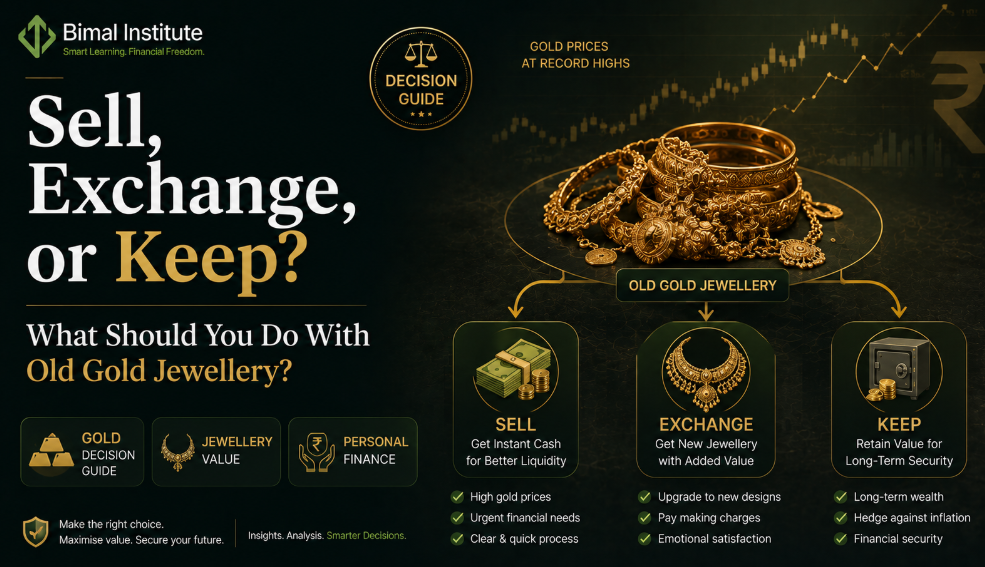
Almost every Indian home has it: old gold lying in a locker, rarely worn, slowly gaining value. With prices high, the question is what to do with it, sell, exchange, or keep. The right answer depends on your situation, and on a few details most people overlook.
Quick answer: Sell old gold jewellery if you need cash or no longer want it, exchange it if you plan to buy new ornaments, and keep it if you want a long-term hedge with no urgent need. Remember you receive only the gold value, not the making charges you originally paid.
When Selling Makes Sense
Selling is the right move when you need liquid cash, when the jewellery is old and never worn, or when you simply want to lock in the current high prices. It also helps if gold has become too large a part of your savings and you want to move money into other assets.

When Exchanging Is Better
If you are going to buy new jewellery anyway, say for a wedding, exchanging beats selling. You hand over old gold, get its gold value credited, and pay making charges only on the new piece. Many jewellers also offer better making-charge deals on exchange. The catch is you must buy from that same jeweller.

When Keeping Gold Is the Smarter Option
Keeping makes sense when you have no urgent need for money and want gold as a long-term hedge against uncertainty and inflation. Heirloom or sentimental pieces are also worth holding. If your savings are already balanced, there is no rush to sell.
Jewellery Value vs Gold Value
This is the point most people miss. When you sell, you are paid the gold value, the weight multiplied by purity and the day’s rate. You are not paid the making charges or GST you originally spent. So the resale value is always less than the bill you paid when buying.
| Action | Best When | Main Trade-off |
|---|---|---|
| Sell | You need cash or want to exit gold | You lose the making charges you paid |
| Exchange | You plan to buy new jewellery | You must buy from the same jeweller |
| Keep | No urgent need, want a hedge | Money stays locked in metal |
View this profile on Instagram
Why the Hallmark Matters
A BIS hallmark, now carried with a six-digit HUID code, proves your gold’s purity. Hallmarked jewellery is easier to sell and usually fetches a better, fairer price because the buyer does not have to doubt its purity. Old, non-hallmarked gold can still be sold, but it will be tested first, and deductions may be higher.
Understanding Making Charges
Making charges are the cost of crafting jewellery, often 8% to 25% of the gold value. They are added when you buy, but you do not get them back when you sell. This is why buying very ornate, high-making jewellery is a poor choice if you might resell it later. For pure value, plain coins or bars are more efficient.

How Purity Is Tested
Reputable buyers test gold transparently, often with an electronic karat or XRF machine that reads purity without damage. Always insist the gold is weighed and tested in front of you. For reference, 22K gold is about 91.6% pure and 24K is about 99.9%.
View this profile on Instagram
Common Mistakes to Avoid
- Not checking the live rate: Confirm the day’s gold rate before agreeing to any price.
- Ignoring purity: Know your karat, and watch the testing happen.
- Accepting high deductions: Some buyers cut large “handling” or “melting” amounts. Compare offers.
- Selling in panic: A price dip is not a reason to rush.
- No bill or proof: Always take proper documentation for the transaction.
- Falling for instant-cash offers: Very fast, no-questions deals often pay the least.
Expert Recommendations
The practical advice is simple. Check the live rate, prefer hallmarked gold, and watch the weighing and testing. If you plan to buy new, exchange instead of selling. If you sell to free up money, plan where it goes next, whether equities, a safe option like an FD or EPF, or another asset such as a digital store of value. And never sell everything at once, since keeping some gold preserves your hedge.
Smart rule: Decide based on your goal, not on emotion or a single day’s price. A clear plan beats a quick deal every time.
Frequently Asked Questions
Should I sell or exchange old gold?
Exchange if you plan to buy new jewellery, since you pay making charges only on the new piece. Sell if you need cash or want to exit gold.
Do I get making charges back when selling gold?
No. You are paid only the gold value, based on weight, purity, and the day’s rate. Making charges are not refunded.
Why is a hallmark important?
A BIS hallmark with HUID proves purity, making your gold easier to sell at a fair price with fewer deductions.
How is gold purity tested?
Usually with an electronic karat or XRF machine that reads purity without damage. Always watch the testing in person.
Is exchanging gold better than selling?
If you want new jewellery, yes, because you save on making charges. If you just want cash, selling is simpler.
What is the difference between gold value and jewellery value?
Gold value is the metal worth alone. Jewellery value, what you paid, also included making charges and GST, which you do not recover on resale.
Should I keep some gold instead of selling all?
Yes. Most experts suggest keeping a portion as a long-term hedge, even if you sell or exchange the rest.
Disclaimer: This article is for general information only and is not financial advice. Gold rates, charges, and rules vary by jeweller and over time. Always confirm details before any transaction and consult a professional where needed.
Deciding what to do with old gold jewellery can be surprisingly difficult, especially when a piece has sentimental value. The comparison between keeping, exchanging, and selling gives readers some useful points to think about before making a choice. I also liked that the topic looks at both practical and personal aspects. A helpful read for anyone sorting through an old jewellery collection.