

Forex Trading Course for Beginners: Step-by-Step Learning Path 2026
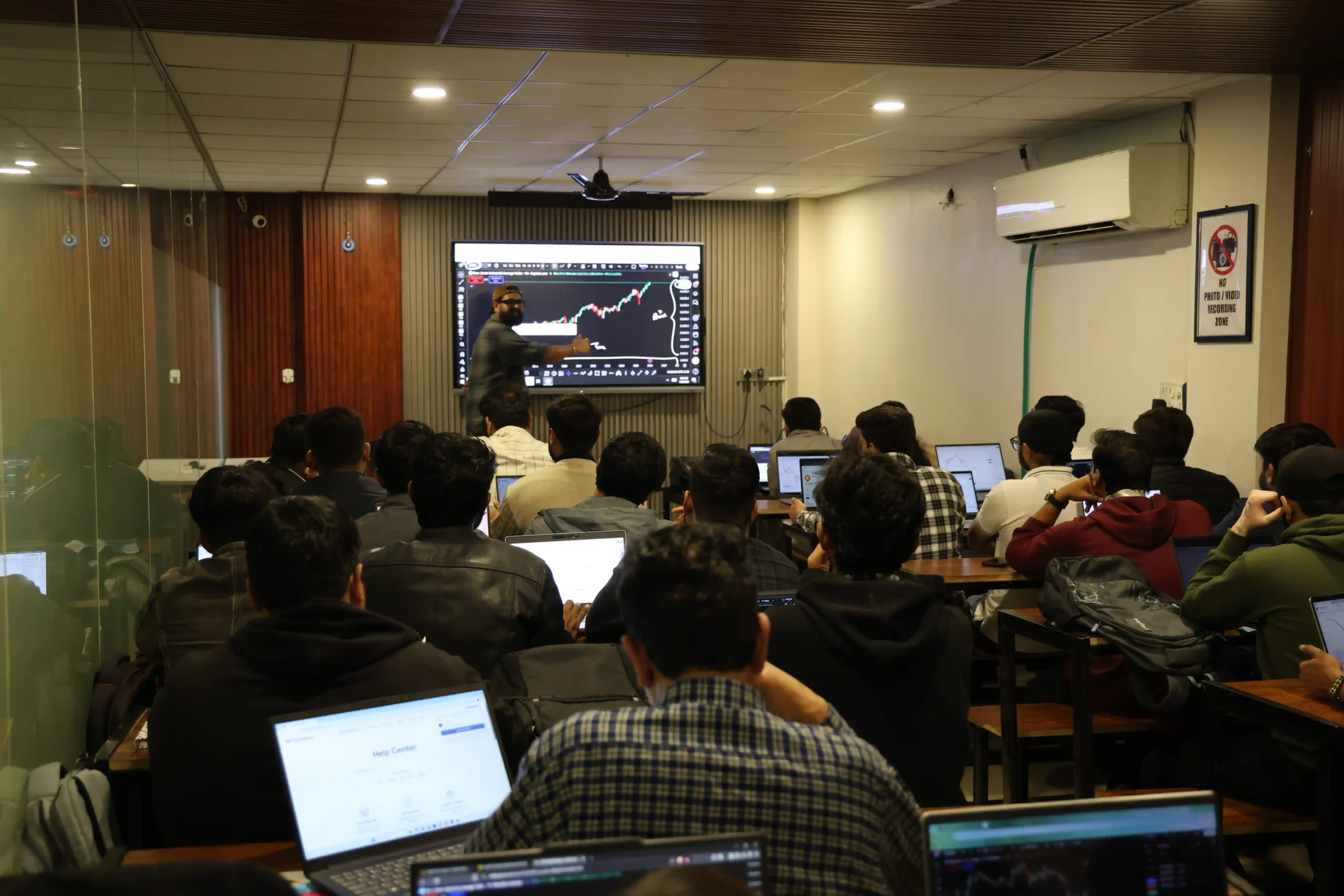
Most people who start forex trading have no idea where to begin. They watch a few YouTube videos, open a live account, and lose money within the first month. Then they either quit or go back and actually learn the subject properly. The smart ones skip that first step.
This article lays out the actual learning path for a beginner — what to study, in what order, and why that order matters. Forex is learnable. But it has a sequence. Skipping steps does not save time. It costs money.
Step 1 — Understand What You Are Actually Trading
Before charts, before indicators, before strategies — you need to understand what the forex market is and how it works at a basic level.
Forex is the global market for buying and selling currencies. Every trade involves two currencies — a currency pair. When you buy EUR/USD, you are buying euros and simultaneously selling US dollars. The price reflects how many dollars one euro is worth at that moment.
The market operates 24 hours a day, five days a week. No central exchange. No single building where all trades happen. It is a decentralised, interbank market where banks, institutions, and retail traders all participate simultaneously. Daily volume in 2026 exceeds $7.5 trillion.
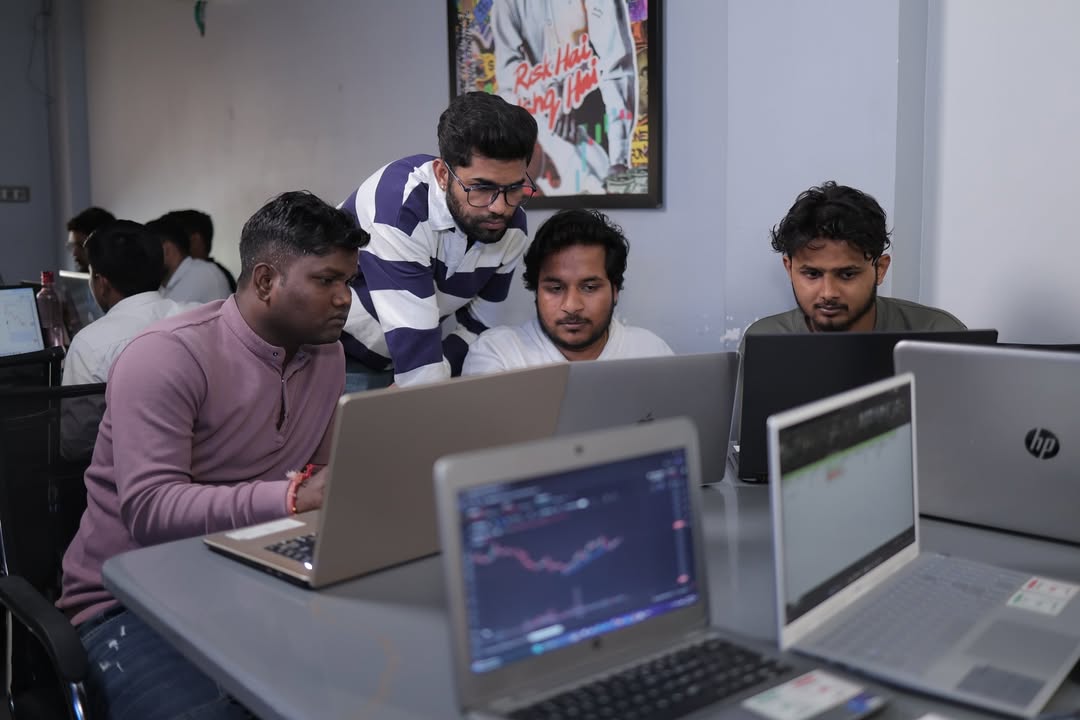
Key concepts to understand at this stage:
- What a currency pair is and how it is quoted
- Base currency vs quote currency
- What a pip and pipette is — the unit of price movement
- What the bid-ask spread is and why it costs money
- Major, minor, and exotic currency pairs
Do not move to the next step until these are automatic knowledge — not something you have to look up.
Step 2 — Learn How Leverage and Margin Actually Work
This is the step where most beginners get hurt. They understand leverage conceptually — “I can control a big position with a small deposit” — but they do not understand what it means for their actual risk.
Leverage amplifies both profits and losses equally. At 100:1 leverage, a 1% price move against you eliminates your entire margin deposit. That is not hypothetical. That is arithmetic. And in forex, a 1% move on a major pair can happen in under an hour around a major news event.
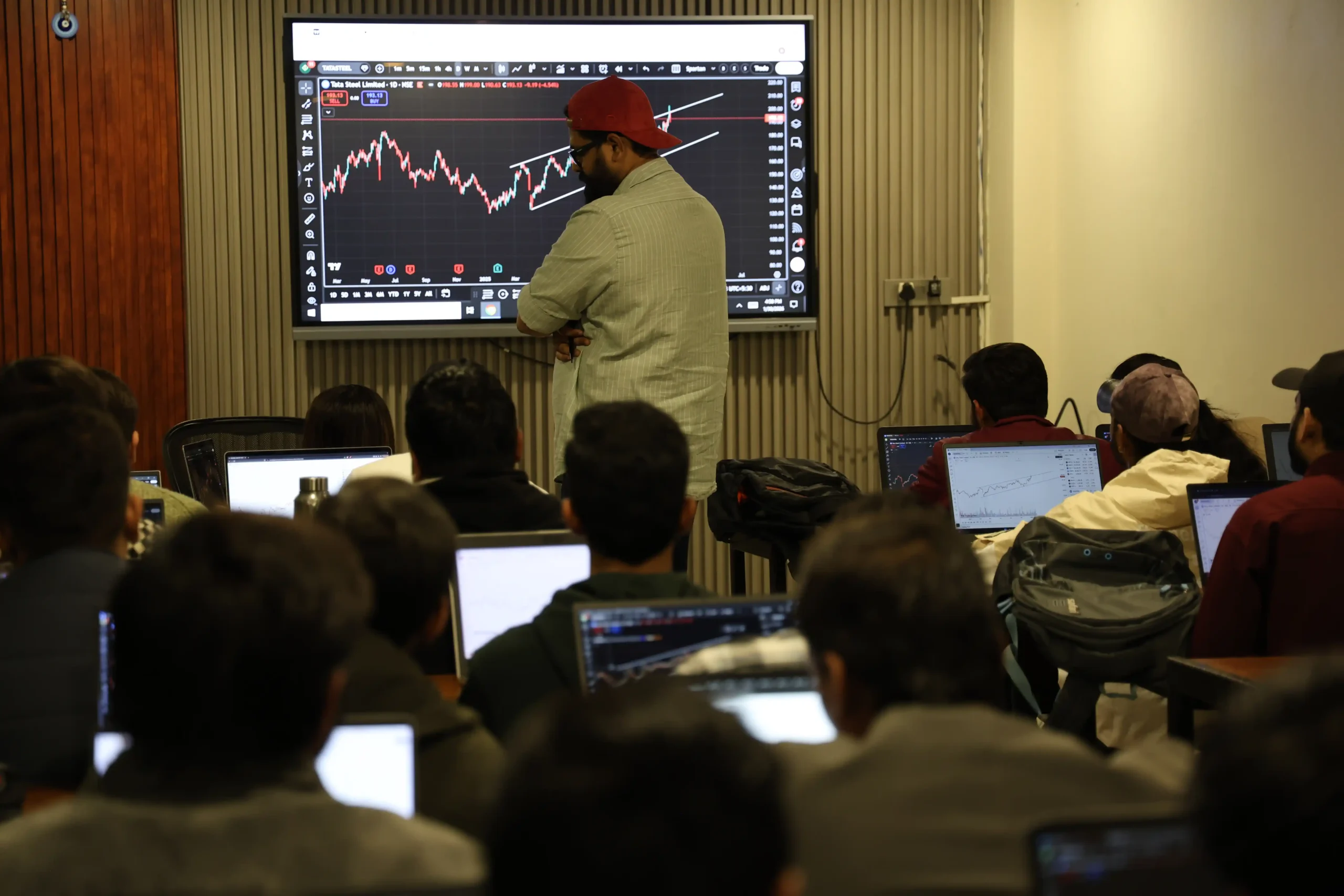
You need to understand:
- What leverage ratio means practically
- What margin is and how it is calculated
- What a margin call and stop-out level is — and why your broker closes your position automatically
- How to calculate position size based on account risk, not available margin
- What lot sizes mean — standard, mini, micro
The practical outcome of this step: before any trade, you should be able to calculate exactly how many rupees you lose if the market hits your stop loss. If you cannot calculate that before entering, you are not ready to trade live.
Step 3 — Learn Technical Analysis Properly
Technical analysis is the study of price action — reading charts to identify where price has been, where it is now, and where it is likely to go based on historical patterns and market structure.
Start with the foundations before touching indicators:
- Candlestick charts — how to read each candle, what it tells you about buyer and seller behaviour
- Support and resistance — the levels where price has historically paused, reversed, or broken through
- Trend identification — higher highs and higher lows in an uptrend, lower highs and lower lows in a downtrend
- Price action patterns — pin bars, engulfing candles, inside bars
- Smart Money Concepts — how institutional traders accumulate and distribute positions
After the foundations, add indicators selectively — not because they predict the future, but because they organise historical data in a way that helps you see what you already know more clearly. Common ones worth learning: moving averages, RSI, MACD, and Bollinger Bands. Learn what each one actually measures before you use it on a live chart.
A mistake many beginners make here: using five indicators at once and looking for a moment when all five agree. That almost never happens, and when it does, the move is usually already mostly complete. Simplicity in technical analysis consistently outperforms complexity.
Step 4 — Understand the Macroeconomic Drivers
Technical analysis tells you what price has done. It cannot tell you why a support level that held for three weeks just broke in 40 seconds. That answer is almost always in the economic data.
The forex market is ultimately driven by the interest rate decisions of central banks. Higher rates attract capital. Lower rates push capital out. The currency of the country with higher rates strengthens. The currency of the country with lower rates weakens. That is the core macro framework behind every sustained forex trend.
Key things to study at this stage:
- How central banks influence the forex market — their tools, mandates, and communication style
- What the FOMC statement is and why it moves USD pairs immediately on release
- How CPI inflation data feeds into rate expectations — and therefore into currency valuations
- What GDP data signals about economic health and its rate implications
- How Non-Farm Payrolls data moves USD — and why the details inside the report often matter more than the headline number
You do not need to become a macroeconomist. You need to understand the chain: economic data → central bank expectations → currency direction. Once that chain is clear, every major data release becomes readable rather than confusing.
Step 5 — Build a Trading Strategy and Define Your Rules
A trading strategy is not a collection of setups you have seen work. It is a written, rule-based system that specifies:
- Which pairs you trade
- Which timeframes you use
- What conditions must be present for you to enter a trade
- Exactly where your stop loss goes on every trade
- Exactly where your take profit is — and why
- How you size positions relative to account risk
- What market conditions cause you to step back and not trade
Most beginners do not write their strategy down. They keep it vague enough that they can always find a reason to enter a trade when they are bored. Vagueness is the enemy of consistency. Write the rules. Trade only the rules. Review whether the rules are working — not whether individual trades worked.
Two popular beginner-friendly strategy frameworks worth researching: trend-following on the 4-hour chart using price action with support/resistance entries, and breakout trading on the 1-hour chart around key session opens. Both are simple enough to define clearly and test properly.
Step 6 — Master Risk Management Before Going Live
Risk management is what keeps you in the game long enough to become profitable. Technical analysis helps you find trades. Risk management ensures that the inevitable losing trades do not end your trading career.
The foundational rules:
- Never risk more than 1–2% of your account on a single trade
- Always define your stop loss before entering — never move it further away to avoid a loss
- Target a minimum 1:2 risk-to-reward ratio — risk 1 to make 2
- Understand that with a 1:2 R:R, you only need to win 34% of trades to break even
- Never add to a losing position — it multiplies losses, not opportunities
- Know the swap rate on any position you plan to hold overnight
The psychological side of risk management is equally important. A trader who understands the rules intellectually but cannot follow them under the emotional pressure of a live losing trade has not actually learned risk management. This is why supervised live market practice — with a mentor watching your decisions — is significantly more effective than solo demo trading.
Step 7 — Demo Trade for at Least 30 Days Before Going Live
Demo trading is not just for testing your strategy. It is for building the mechanical habits — order entry, stop placement, position sizing calculations — until they are automatic. A trader who has to think carefully about how to place a stop loss during a live trade is already operating at a disadvantage because cognitive load slows execution.
30 days is a minimum. What matters more than the time is the quality of the practice. Keep a journal. Record every trade — the entry reason, the stop level, the target, the outcome, and your emotional state during the trade. Review the journal weekly. The patterns in your journal are more informative than any indicator on your chart.
Only move to a live account when you have been consistently profitable on demo for at least 3–4 consecutive weeks — and when your risk management rules are being followed on every single trade without exception.
Step 8 — Start Live Trading with Minimum Capital and Scale Slowly
Your first live account should be small enough that a complete loss would not change your life — but large enough that the trades feel real. For most Indian traders, ₹10,000 to ₹30,000 is a sensible starting range depending on the broker’s minimum lot sizes.
The purpose of the first three months of live trading is not profit. It is confirming that you can execute your demo strategy with the same discipline when real money is involved. For most traders, there is a gap — emotions behave differently with live capital. Identifying and closing that gap is the real work of the first live trading phase.
Scale your position sizes only when you have three consecutive profitable months on live capital using your defined strategy. Not when you feel ready. Not when you have had a few good trades in a row. Three months of documented, rule-consistent profitability.
What the Full Learning Path Looks Like
| Stage | What You Are Learning | Approximate Time |
|---|---|---|
| 1 | Market basics, currency pairs, pips, spreads | 1–2 weeks |
| 2 | Leverage, margin, lot sizing, position risk calculation | 1–2 weeks |
| 3 | Technical analysis — price action, support/resistance, patterns | 3–4 weeks |
| 4 | Macroeconomics — central banks, inflation, employment data | 2–3 weeks |
| 5 | Strategy building and rule definition | 1–2 weeks |
| 6 | Risk management — rules and psychology | Ongoing |
| 7 | Demo trading with journal | 30–60 days |
| 8 | Live trading — small capital, scaling slowly | 3+ months before scaling |
Total realistic timeline from zero knowledge to live trading with a tested strategy: 4 to 6 months of serious, consistent study and practice. Anyone promising profitable live trading in two weeks is either selling you something or has never traded a real account themselves.
The Difference Between Self-Teaching and Structured Education
Everything in this article can technically be learned for free — through YouTube, forums, and trial and error. The question is not whether free learning is possible. It is how expensive the trial and error will be before the learning sticks.
Self-taught traders typically spend 12 to 24 months and multiple blown accounts finding the knowledge that a structured program delivers in 4 to 8 weeks. The cost of those blown accounts — in money, time, and psychological damage — almost always exceeds the cost of proper education.
A structured forex trading course covers all eight steps above in sequence, with someone who has already made every mistake ensuring you do not have to make them all yourself. It adds supervised live practice — which solo demo trading cannot replicate. And it includes the psychology component that almost no free resource covers adequately, because trading psychology is something experienced traders understand from having lived through it, not from having read about it.
For traders across Madhya Pradesh — from Indore and Bhopal to Ratlam, Vidisha, Neemuch, and Mandsaur — the option to learn properly, with structured mentorship and live practice, is available both online and offline. The learning path above is the same regardless of where you start. What changes is how efficiently and how safely you navigate it.
If you want to explore what a structured program looks like before committing, Bimal Institute offers a free trading course as a starting point. The full Crypto & Forex Trading Program covers all eight steps in this article with supervised live practice, 1-on-1 mentorship, and dedicated psychology sessions. Enrollment details are at bimalinstitute.com/admission-page or call +91 8889422237.
FAQs — Forex Trading Course for Beginners
How long does it take to learn forex trading from scratch?
Realistically, 4 to 6 months of serious, consistent study to reach a point where you are ready to trade live with a tested strategy. Another 3 to 6 months of live trading experience before you have enough data to evaluate your strategy’s actual edge. Anyone who tells you they were profitable within their first month is either unusually gifted, unusually lucky, or not being honest about their results.
Can I learn forex trading for free?
You can learn the concepts for free. Learning to actually trade profitably — to execute under emotional pressure, manage risk consistently, and read markets accurately — almost always requires either a structured program or a very expensive period of self-taught trial and error. The knowledge is free. The practice is what costs, one way or another.
What should a beginner trade first?
EUR/USD. It is the most liquid pair in the world, has the tightest spreads, the most educational resources, and produces the cleanest technical analysis signals. Master one pair before expanding to others. Most successful traders have one or two pairs they know exceptionally well rather than ten pairs they know superficially.
How much money do I need to start forex trading?
To trade with proper risk management — where 1% of your account equals a meaningful but not catastrophic rupee amount — a starting capital of ₹20,000 to ₹50,000 is more realistic than the ₹500 minimum deposit most brokers advertise. The minimum deposit to open an account and the minimum capital to trade sensibly are very different numbers.
Is a forex trading course worth paying for?
If it includes live market practice with mentorship and structured curriculum — yes, for most people. The cost of a quality course is typically less than the cost of the account losses a self-taught trader accumulates during the same learning period. The caveat: verify the course’s credibility through verifiable reviews and the transparency of its instructors before paying anything.