

EPFO Interest Rate History: How 8.25% Compares to the Last Decade
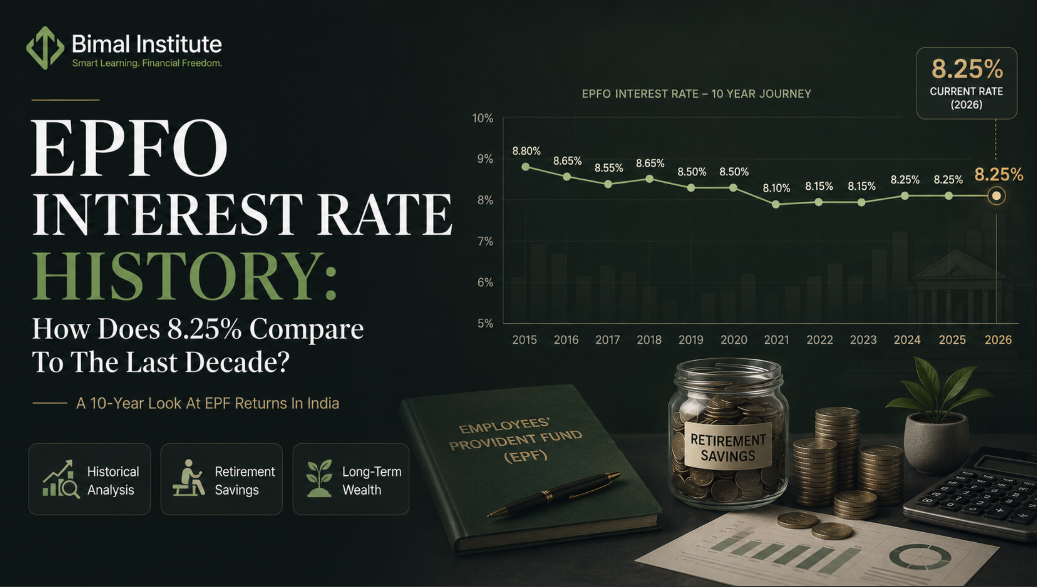
Every salaried Indian who sees “8.25%” credited to their PF asks a fair question: is that a good rate, or have we seen better? To answer it, you cannot look at one year alone. You have to look at the EPFO interest rate history and see where 8.25% really stands.
The short version is this. Today’s rate is below the highs of a decade ago, but well above the recent low. More importantly, it has held steady for three years in a row. This data-driven look at EPF rate history shows you the full trend, why rates move, and whether 8.25% is a deal worth celebrating in 2026.
Quick view: In the last decade, EPF rates ranged from a high of 8.80% (2015-16) to a low of 8.10% (2021-22). The current 8.25% sits in the lower-middle band, but it has been stable since 2023-24 and still beats almost every other safe option. Want to know how much that 8.25% adds to your balance? See our guide on how much your PF will grow in 2026.
Year-Wise EPFO Interest Rate Table (Last Decade)
Numbers tell the story best. Here is the year-wise EPFO interest rate history for the past eleven financial years, based on official EPFO declarations.
| Financial Year | EPF Interest Rate |
|---|---|
| 2015-16 | 8.80% |
| 2016-17 | 8.65% |
| 2017-18 | 8.55% |
| 2018-19 | 8.65% |
| 2019-20 | 8.50% |
| 2020-21 | 8.50% |
| 2021-22 | 8.10% |
| 2022-23 | 8.15% |
| 2023-24 | 8.25% |
| 2024-25 | 8.25% |
| 2025-26 | 8.25% |
The PF interest rate trend is clear. Rates drifted down from 8.80% to a low of 8.10%, then recovered and settled at 8.25%. The slow decline is not random, and understanding why matters.

Why EPFO Rates Change
EPFO does not pick a rate out of thin air. Every year, its Central Board of Trustees studies how much the fund earned, then recommends a rate the government can safely afford to pay. If EPFO promised more than it earned, it would dip into reserves, which it tries to avoid.
So the rate reflects the income EPFO makes on the money it manages. When that income rises, the rate can rise. When it falls, the rate is trimmed. This is the engine behind the entire EPF rate history.
Economic Factors Affecting EPF Returns
EPFO invests most of your money in safe instruments like government bonds, with a smaller slice in equity. So a few big economic forces shape your EPF return.
- RBI repo rate: It has fallen from around 12% in the 1990s to about 5.25% in 2026. Lower rates across the economy pull EPF returns down too.
- Government bond yields: EPFO earns from government bonds. As yields dropped from 12-13% to around 7%, EPF income fell with them.
- Inflation: Falling inflation over the years allowed lower interest rates everywhere.
- Equity returns: EPFO’s stock investments can lift or drag the rate depending on market years.
Put together, these factors explain almost every move in the EPFO interest rate history of the last decade.

Highest and Lowest EPFO Rates in Recent History
Two years stand out in the recent EPF rate history, one good and one painful.
| Record | Year | Rate |
|---|---|---|
| Highest in the decade | 2015-16 | 8.80% |
| Lowest in the decade | 2021-22 | 8.10% |
The 8.10% in 2021-22 was not just a decade low. It was the lowest EPF rate in more than forty years. Yet even then, EPFO never let the rate fall below 8%, a floor it has protected since 1977-78. That long streak is a key reason members trust the scheme for retirement planning.
How Members Were Impacted
For a member, even a small rate change adds up over time. Consider a person with Rs 10 lakh in their PF. At 8.80%, they earned Rs 88,000 in a year. At 8.10%, the same balance earned Rs 81,000. That is a Rs 7,000 difference in one year, and far more over a full career once compounding is counted.
The real lesson: Members felt the dips, but because EPF compounds tax-free and never crashed, long-term savers still came out ahead of most other safe products. Staying invested mattered more than chasing the highest year.
Is 8.25% Good Compared to the Past?
Looking at the full EPFO interest rate history, 8.25% is not the best the scheme has ever paid, but it is far from the worst. It is a recovery from the 8.10% low and has been held steady for three straight years, which signals stability after a tough patch.

More importantly, 8.25% today is worth more than 8.50% was years ago, because interest rates everywhere are lower now. Compared to today’s bank deposits, EPF is clearly ahead. You can see the full breakdown in our comparison of EPFO 8.25% vs bank FD returns in 2026.
What Experts Say
Most analysts view 8.25% as a strong, sensible rate for current conditions. Their reasoning is consistent: EPF remains one of the few products that combines a high rate, government safety, and tax-free growth. In a world of falling yields, holding 8.25% without straining EPFO’s finances is seen as a healthy, responsible outcome rather than a disappointment.
Experts also point out that the steady rate, tracked through years of EPFO updates, shows the fund is managing risk well rather than over-promising.
Future Outlook
What lies ahead? With bond yields low and the repo rate around 5.25%, big jumps in the EPF rate look unlikely in the near term. Most expectations point to the rate staying in a stable 8% to 8.25% band, with EPFO defending its long-held floor above 8%.
Bottom line: Across the full EPFO interest rate history, 8.25% is a solid, stable rate that still beats most safe options. For long-term retirement planning, the smartest move is not to chase the highest year, but to keep your EPF growing and let tax-free compounding do the heavy lifting.
FAQs
What is the current EPFO interest rate?
For 2025-26 it is 8.25%, the same rate held since 2023-24.
What was the highest EPF rate in the last decade?
8.80% in 2015-16 was the highest in the recent EPF rate history.
What was the lowest EPF rate recently?
8.10% in 2021-22, which was also the lowest in more than forty years.
Has the EPF rate ever fallen below 8%?
No. Since 1977-78, EPFO has kept the rate at or above 8%, a streak of more than four decades.
Why do EPFO rates keep changing?
The rate depends on how much EPFO earns on its investments. As bond yields and the repo rate fell over the years, EPF returns drifted lower too.
Is 8.25% a good rate today?
Yes. Given low interest rates across the economy, 8.25% tax-free and government-backed is one of the best safe returns available for retirement planning.
Will the EPF rate rise in the future?
A big rise looks unlikely soon, as yields are low. Most expect the rate to stay stable in the 8% to 8.25% range.
Where can I check official EPFO updates?
You can check the official EPFO member portal and government notifications for the latest declared rate each year.
Disclaimer: This article is for general information only and is not financial advice. Historical rates are based on official EPFO declarations and may be revised. Always confirm current figures on the official EPFO website or with a qualified advisor.