

7 Common Mistakes Made by Beginner Forex Traders And How to Avoid Them
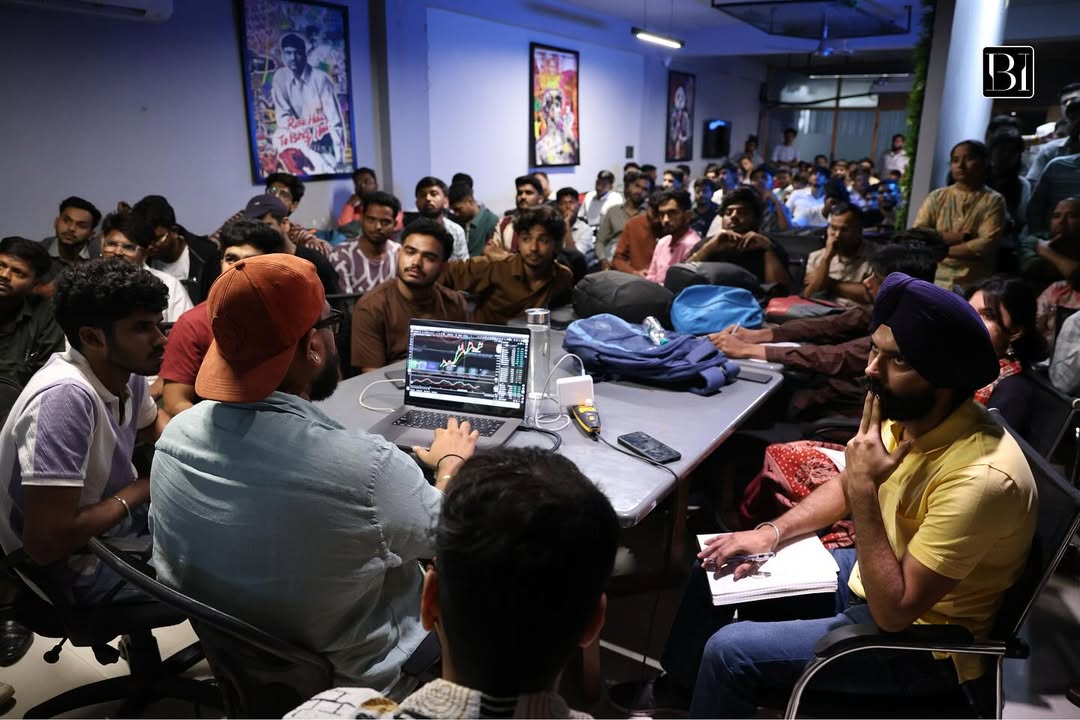
The mistakes in this article are not theoretical. They are the patterns that emerge consistently when observing new traders across every background, city, and experience level — from first-time traders in Indore to working professionals in Singrauli who approached trading as a second income. The patterns are remarkably consistent. What varies is only the speed at which each person learns from them.
Most traders do not fail in forex because the market is too complex for them. They fail because they skip foundational knowledge, make emotionally driven decisions, and treat trading like gambling dressed in a suit. The forex market does not reward effort alone — it rewards correct effort, applied systematically, with patience.
What follows is an honest account of the seven mistakes that most consistently damage beginner accounts — and more importantly, the specific mechanics behind why each one is destructive and what actually fixes it.
Common Mistakes Made by Beginner Forex Traders in Table
| # | Problem / Mistake | What Beginners Usually Do | What Happens Because of It | Practical Fix |
|---|---|---|---|---|
| 1 | Not Understanding Pip Value | Trade without calculating pip cost or total risk | Losses become unpredictable; small moves create huge damage | Calculate stop loss, pip value, and total ₹ risk before every trade |
| 2 | Ignoring Spread Costs | Focus only on entry setup and ignore spread | Scalping becomes unprofitable; hidden costs eat profits | Trade during liquid sessions and choose low-spread brokers |
| 3 | Overusing Leverage | Use maximum leverage offered by broker | Margin calls, emotional panic, account wipeouts | Risk only 1–2% per trade and use lower effective leverage |
| 4 | Same Strategy in Every Market | Apply one setup in trending and ranging markets alike | Strategy suddenly “stops working” | Identify market condition first, then use matching setup |
| 5 | Ignoring Macro Events | Trade charts without checking news or economic calendar | Technical setups fail instantly during major events | Track FOMC, CPI, NFP, interest rates, and central bank news |
| 6 | Letting Losses Grow | Move stop loss further away hoping for reversal | Small losses become account-threatening losses | Keep predefined stop loss fixed and accept planned losses |
| 7 | Going Live Too Early | Start real-money trading without structured learning | Multiple beginner mistakes happen simultaneously | Practice with structured education and supervised live sessions |
| 8 | Emotional Decision Making | Revenge trade, overtrade, or panic during volatility | Inconsistent performance and psychological burnout | Follow a fixed trading plan and maintain a trading journal |
| 9 | Treating Trading Like Gambling | Chase quick money without process or discipline | Random results and rapid capital destruction | Build a rules-based trading system with risk management |
| 10 | Lack of Structured Education | Learn only from random videos or signal groups | Confusion, misinformation, and expensive trial-and-error | Follow a step-by-step learning program with practical training |
| 11 | No Risk Management Framework | Enter trades without position sizing rules | One bad trade damages entire account | Use strict position sizing and capital preservation rules |
| 12 | Poor Psychological Control | Fear and greed influence every decision | Traders exit winners early and hold losers too long | Develop discipline through repetition, journaling, and practice |
| 13 | Ignoring Swap & Holding Costs | Keep losing trades overnight without calculation | Additional daily charges increase losses | Understand swap rates before swing or overnight trades |
| 14 | Blindly Following Tips & Signals | Depend completely on Telegram or social media calls | No independent decision-making ability | Learn market logic instead of copying trades blindly |
| 15 | Lack of Patience | Force trades even when conditions are unclear | Overtrading and low-quality entries | Wait only for high-probability setups |
1 Trading Without Understanding What a Pip Actually Costs
This sounds too basic to matter. It consistently costs beginners thousands of rupees before they address it. A surprising number of traders open live accounts, place trades, and have no reliable mental calculation for what a 30-pip move against them actually means to their account balance.
View this profile on Instagram
They know the market moved. They see the loss. But they do not know — before entering — whether that loss was going to be ₹300 or ₹3,000. That gap in awareness is not just ignorance about pip values — it is the absence of a risk management framework, because risk management begins with knowing the monetary value of every price movement before you are in it.
The lot size determines pip value. The lot size is chosen before entry. Which means every trader who enters a position without calculating pip value first has already abdicated control of their risk before the trade has even started.
The fix: Before every single trade, calculate: (1) your stop loss in pips, (2) the pip value at your chosen lot size, (3) the total rupee loss if stopped out. If that number exceeds 1–2% of your account, reduce the lot size. This takes 30 seconds and saves accounts.
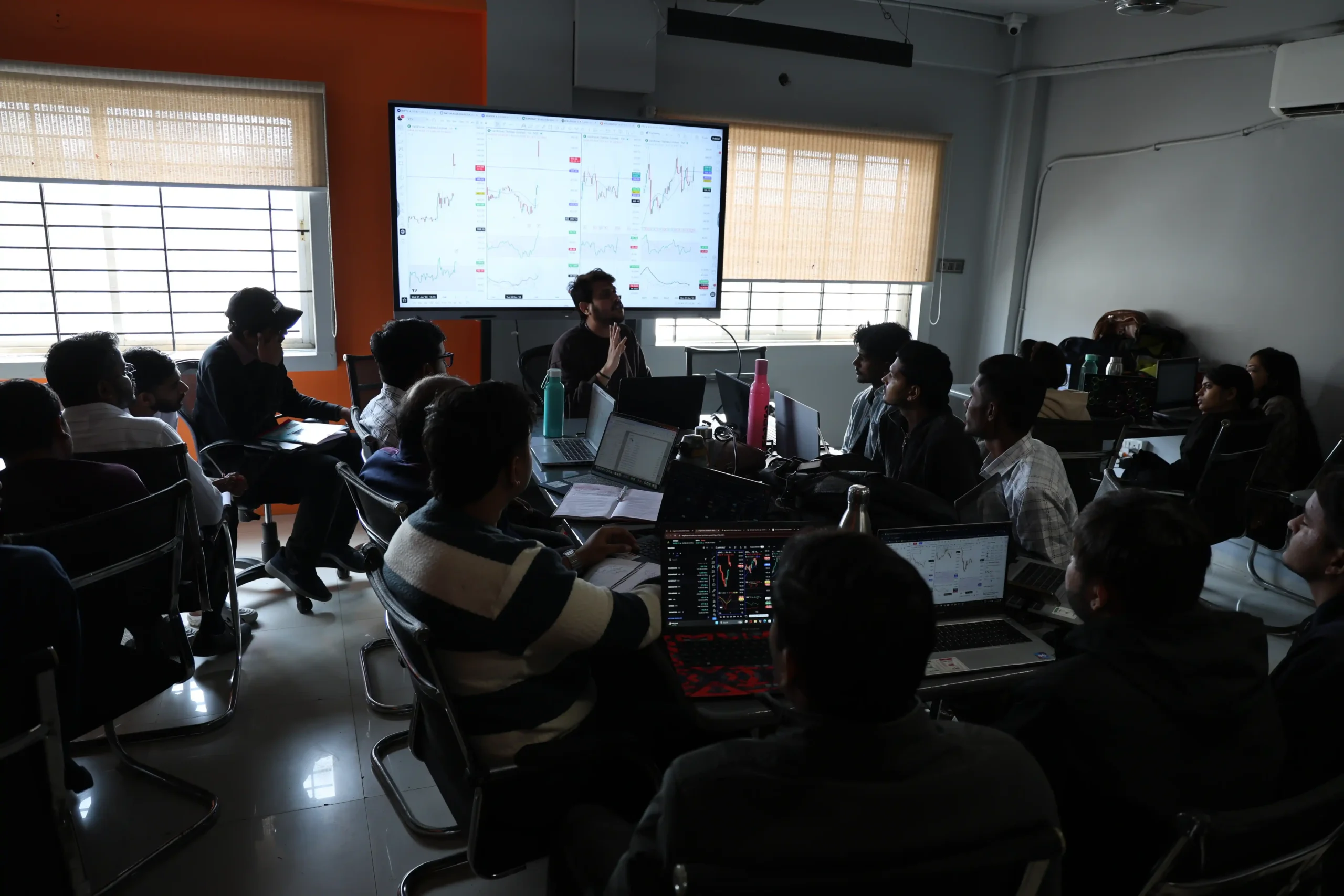
On a standard lot, each pip of EUR/USD movement is worth approximately ₹700. On a micro lot, it is ₹7. On a mini lot, ₹70. These numbers must be automatic — not calculated during a fast-moving trade when your emotional brain is already engaged.
2 Ignoring the Spread and Treating It as a Minor Detail
The bid-ask spread is the first cost of every trade — charged the moment you enter, before the market has moved a single pip. For most traders in the early stages, it registers as a minor line item. For traders running high-frequency strategies, it is the difference between profitability and a slowly draining account.
View this profile on Instagram
The specific situation where spread ignorance causes the most damage is when beginners attempt short-term trades on pairs with wide spreads. Trading GBP/USD during an off-peak liquidity window with a 2-pip spread while targeting 5 pips means you need the market to move 2 pips just to break even. Your effective target is 5 pips. Your effective obstacle is 5 pips (2 spread + 3 actual move to show profit). That is a 40% invisible headwind before you have made a single profitable move.
Spreads also widen dramatically during high-impact economic releases — the FOMC statement, CPI data, and Non-Farm Payrolls. A beginner who enters a position at the moment of release is often entering at 5–8 pips of effective cost — not the 0.5 pips they see on the broker’s marketing page.
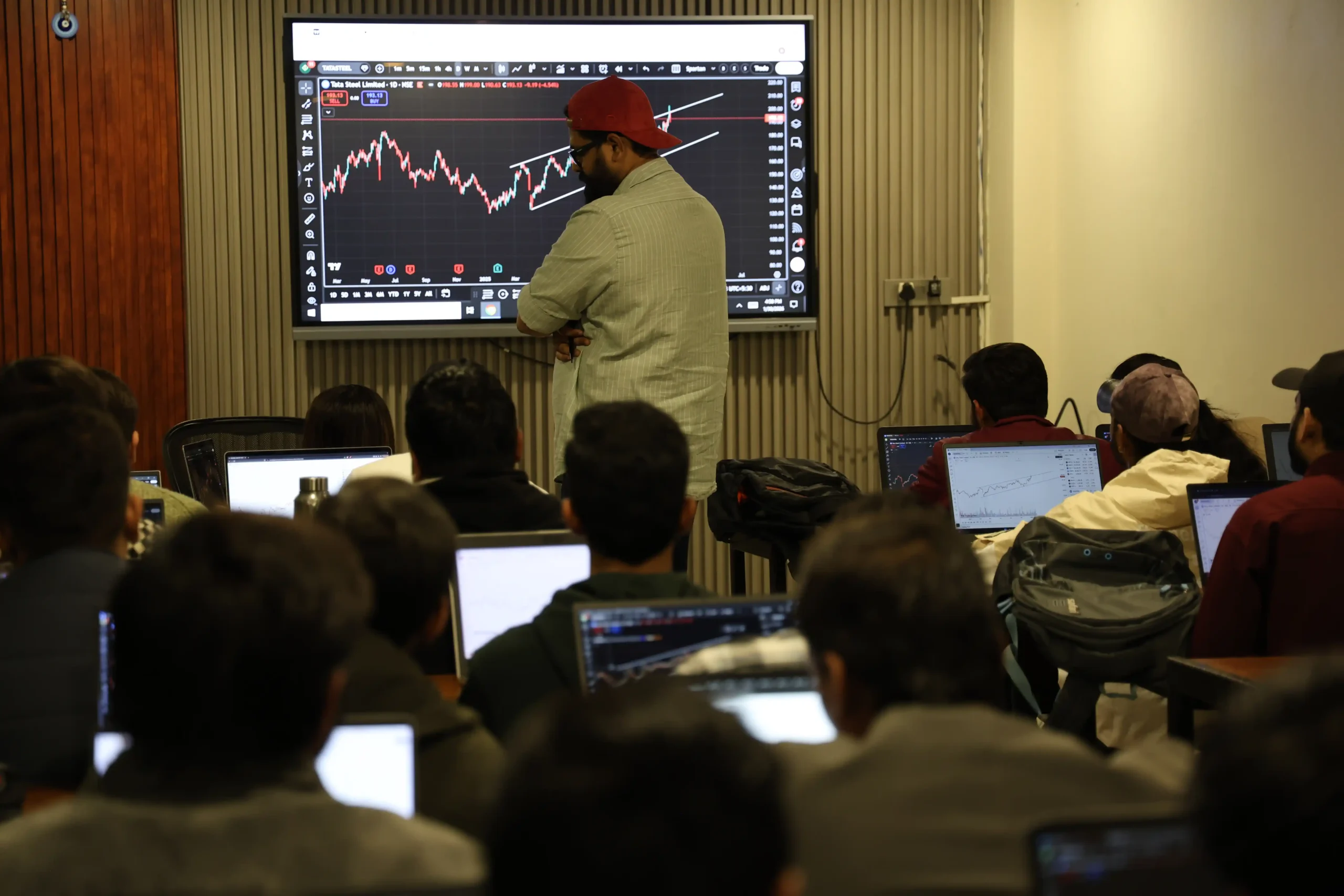
“The spread is not a fee you pay to the broker. It is a price you pay to the market for the right to enter immediately. Understanding that distinction changes how you think about entry timing and position sizing.”
Understanding how to choose a forex broker with consistently tight spreads — not just advertised minimum spreads — is one of the first practical decisions every trader must get right.
3 Using Leverage That the Account Cannot Support
Leverage is where most beginner accounts actually end — not in a single dramatic loss, but in a slow, grinding series of overleveraged positions that produce losses too large to recover from psychologically or financially.
The pros and cons of leverage in forex are real on both sides. At 10:1 leverage, a 1% adverse price move costs 10% of your margin. At 100:1, the same 1% move costs your entire margin. In a market where volatility can produce 50–150 pip moves in a session — particularly around economic releases — 100:1 leverage is not a tool. It is a timer.
The leverage ratio a broker offers and the leverage a disciplined trader should use are almost never the same number. Most regulated brokers cap retail leverage at 30:1 to 50:1. Most profitable retail traders use 5:1 to 20:1 in practice — not because they cannot access more, but because they understand what overleveraging actually does to their margin buffers and their psychology.
🔴 Real Pattern — The Leverage Spiral
A beginner opens a ₹20,000 account at 100:1 leverage and places a 1-lot EUR/USD trade. Their position is worth approximately ₹75,00,000. A 10-pip adverse move — a completely normal short-term fluctuation — costs them ₹7,000. That is 35% of their account on a 10-pip move they had no reason to expect would not happen.
They panic, move their stop loss further away to avoid being stopped out. The market continues moving against them. Their margin level falls. The broker sends a margin warning. The position is stopped out by the stop-out mechanism at a 60% account loss.
The trade was not wrong. The leverage was wrong. At 0.1 lots, the same 10-pip move would have cost ₹700 — a 3.5% loss that the account could absorb and learn from.
4 Trading the Same Strategy Across Every Market Condition
Forex markets are not constant. They alternate between trending conditions — where price moves persistently in one direction — and ranging conditions — where price oscillates between defined support and resistance levels without clear directional momentum. A strategy built for one condition fails systematically in the other.
Beginners almost universally treat their strategy as fixed. They find a setup that worked three times in a row, declare it their system, and apply it indiscriminately regardless of what the market is actually doing. When it stops working — which happens within the normal rotation of market conditions — they either abandon the strategy prematurely or continue applying it past the point where the damage is recoverable.

Learning to distinguish between trending and ranging market conditions is one of the earliest — and most practically impactful — skills in any trader’s development. Understanding different trading approaches like scalping vs day trading helps beginners recognise that strategy selection is not just about style — it is about matching your approach to the specific type of price action the market is currently producing.
Seasoned traders do not ask “will my setup work today?” They ask “what type of market condition is this — and which of my setups is designed for this condition?” That is a fundamentally different analytical question, and it changes the hit rate of every strategy dramatically.
The fix: Before any trading session, spend 5 minutes identifying the market condition on the pair you plan to trade. Is price making higher highs and higher lows (uptrend)? Lower highs and lower lows (downtrend)? Moving sideways within a defined range? Use only setups designed for that specific condition. Leave the session if no appropriate condition exists.
5 Trading Without Any Macro Context — Ignoring the Big Picture
Technical analysis tells you what price has done and suggests what it might do next based on historical patterns. It cannot tell you that the reason your carefully identified support level just broke was that the US Bureau of Labor Statistics released a surprise jobs number 4 minutes ago that repriced Federal Reserve rate expectations by 25 basis points.
Beginner traders who trade exclusively on technicals without understanding the macro environment get repeatedly ambushed by economic events that override every chart pattern they identified. The FOMC statement can invalidate a carefully constructed technical trade in 3 seconds. A surprise CPI print can move EUR/USD 100 pips through a support level that held 15 times in the previous month. GDP data that significantly misses or beats the forecast can reverse a 3-week trend in a single session.
This does not mean every trader must be a macro economist. It means every trader must know — before every session — what high-impact economic releases are scheduled that day, what the current market narrative around those releases is, and whether being in a leveraged position around that event is a risk worth accepting.
Understanding how central banks influence the forex market is not advanced knowledge for experienced traders. It is foundational context that every beginner needs before their first live trade. The relationship between interest rates, central bank communication, and currency valuations is the bedrock on which every sustained forex trend is built.
The COT report — the Commitment of Traders data — is another layer of context that beginners consistently ignore. It reveals how institutional traders are positioned across major pairs — information that helps traders understand whether the current trend has institutional conviction behind it or is approaching the crowded positioning that often precedes reversals.
6 Letting Small Losses Become Account-Threatening Losses
Every experienced trader knows this truth: small losses are the tuition fee of the forex market. They are expected. They are planned for. They are absorbed and moved on from. The traders who build profitable careers are not those who avoid all losses — they are those who consistently limit losses to a size that the account can survive and compound from.
What destroys beginner accounts is not losses. It is the psychological inability to take small losses — which leads to the much larger losses that come from letting losing positions run far beyond their planned stop loss distance.
The mechanics of this failure follow a specific pattern. A trader enters a position with a planned stop loss. The market moves against them. The stop is approached. Rather than accepting the planned loss, the trader moves the stop further away — hoping for a reversal. The loss grows. The position eventually closes — either by a manually moved stop or by a margin call — at 5x to 10x the originally planned loss.
This pattern has a specific name in behavioural economics — loss aversion. Humans experience losses approximately twice as intensely as equivalent gains. The emotional pain of crystallising a loss by closing the position is genuinely more intense than the anxiety of watching an unrealised loss grow. This is why disciplined stop loss adherence feels so counterintuitive — and why it requires deliberate training to build into a consistent habit.
The most dangerous thought in forex trading: “It will come back.” Sometimes it does. But building a trading system on the assumption that the market will eventually return to your entry price is not trading. It is hope dressed as strategy — and it eventually produces an account that does not come back.
Understanding the relationship between swap rates and extended losing positions adds another layer to this mistake. A beginner who refuses to close a losing trade overnight is not just sitting with a directional loss — they are also paying daily swap costs on that position, which compound the loss further with each passing day.
7 Skipping the Education Phase and Going Live Too Quickly
This is the mistake that makes all the others more expensive. A trader who goes live without proper foundational education does not just make one mistake — they make all six of the mistakes above simultaneously, at real cost, with real capital, under real emotional pressure.
The forex market has no onboarding process, no tutorial mode, no gradual difficulty curve. You are immediately exposed to the full complexity of a market where institutional traders with billion-dollar research budgets, algorithmic trading systems executing in milliseconds, and experienced retail traders with years of screen time are all competing simultaneously. The beginner who enters this environment without structured education is not just at a disadvantage — they are almost certainly going to lose capital they cannot afford to lose.
The traders who build sustainable, profitable forex careers almost universally share one characteristic — they invested real time and often real money in proper structured education before risking significant capital in live markets. Not YouTube videos. Not Telegram signal groups. Not a friend’s tips. Structured, sequenced learning from experienced practitioners who understand both the technical and psychological dimensions of trading.
Traders across Madhya Pradesh — from Bhopal and Jabalpur to Gwalior, Ratlam, Vidisha, Neemuch, Mandsaur, Chhindwara, and Katni — who completed a proper structured program before going live consistently avoided the most expensive versions of all seven mistakes above. Those who went live first and sought education only after losses consistently paid far more in tuition to the market than they would have paid for proper training.
The education phase is not a delay — it is the shortest path to profitability.
All 7 Mistakes — Quick Reference
| # | Mistake | Root Cause | What Actually Fixes It |
|---|---|---|---|
| 1 | Not knowing pip value before entry | Skipping pip mechanics and lot sizing | Calculate pip cost on every trade before entry |
| 2 | Ignoring spread costs | Seeing spread as a minor detail | Choose the right broker; track real spread in your session window |
| 3 | Overleveraging positions | Using maximum available leverage | Size positions from 1-2% risk rule, not available margin |
| 4 | Fixed strategy in all market conditions | No market condition analysis | Identify condition first; apply matched strategy |
| 5 | Zero macro context | Trading technicals only | Follow FOMC, CPI, NFP, COT; understand central bank mechanics |
| 6 | Letting small losses become large ones | Loss aversion + stop moving | Pre-defined stops; understand margin calls; accept small losses |
| 7 | Going live without education | Impatience + misplaced confidence | Structured program with live practice before significant capital |
One Thing Connects All Seven Mistakes
Looking at these seven mistakes together, there is a single thread running through all of them — the absence of structured, sequenced education before entering live markets with real capital.
A trader who properly learns pip and pipette values, lot sizing, leverage mechanics, margin requirements, spread costs, slippage, swap rates, and macroeconomic data reading in a structured environment — before live trading — avoids the most expensive versions of all seven mistakes. They still make mistakes. All traders do. But they make smaller, cheaper, more recoverable ones because they have a framework for understanding what went wrong and correcting it.
The forex education available across cities like Indore, Sagar, Rewa, Dewas, Ujjain, Dhar, Harda, Sehore, Agar Malwa, Khargone, Shahdol, Satna, Hoshangabad (Narmadapuram), and Burhanpur has improved dramatically — and traders across MP now have genuine access to structured education that covers everything from market mechanics to live trading practice and dedicated psychology sessions. The tools to avoid every mistake on this list are available. The only variable is whether a trader uses them before going live — or after.
Beyond forex, many of the same foundational disciplines apply in crypto derivatives trading — where funding rates, open interest dynamics, and market cap analysis add additional layers of complexity that uninformed traders discover only after making expensive mistakes.
Whether your interest is forex, crypto, or understanding currency pair categories, the same principle applies — start learning before you start risking. The market will still be there when you are ready. It is considerably less forgiving to those who arrive before they are.
Build Your Trading Foundation the Right Way
Bimal Institute’s Crypto & Forex Trading Program (CFTP) is specifically designed to address every mistake on this list — through structured curriculum, 30+ days of supervised live market practice, and dedicated trader psychology sessions. Rated 4.9★. 1,50,000+ traders trained across Madhya Pradesh. Available online and offline. Or start with the free trading course today.
Visit bimalinstitute.com/admission-page or call +91 8889422237.